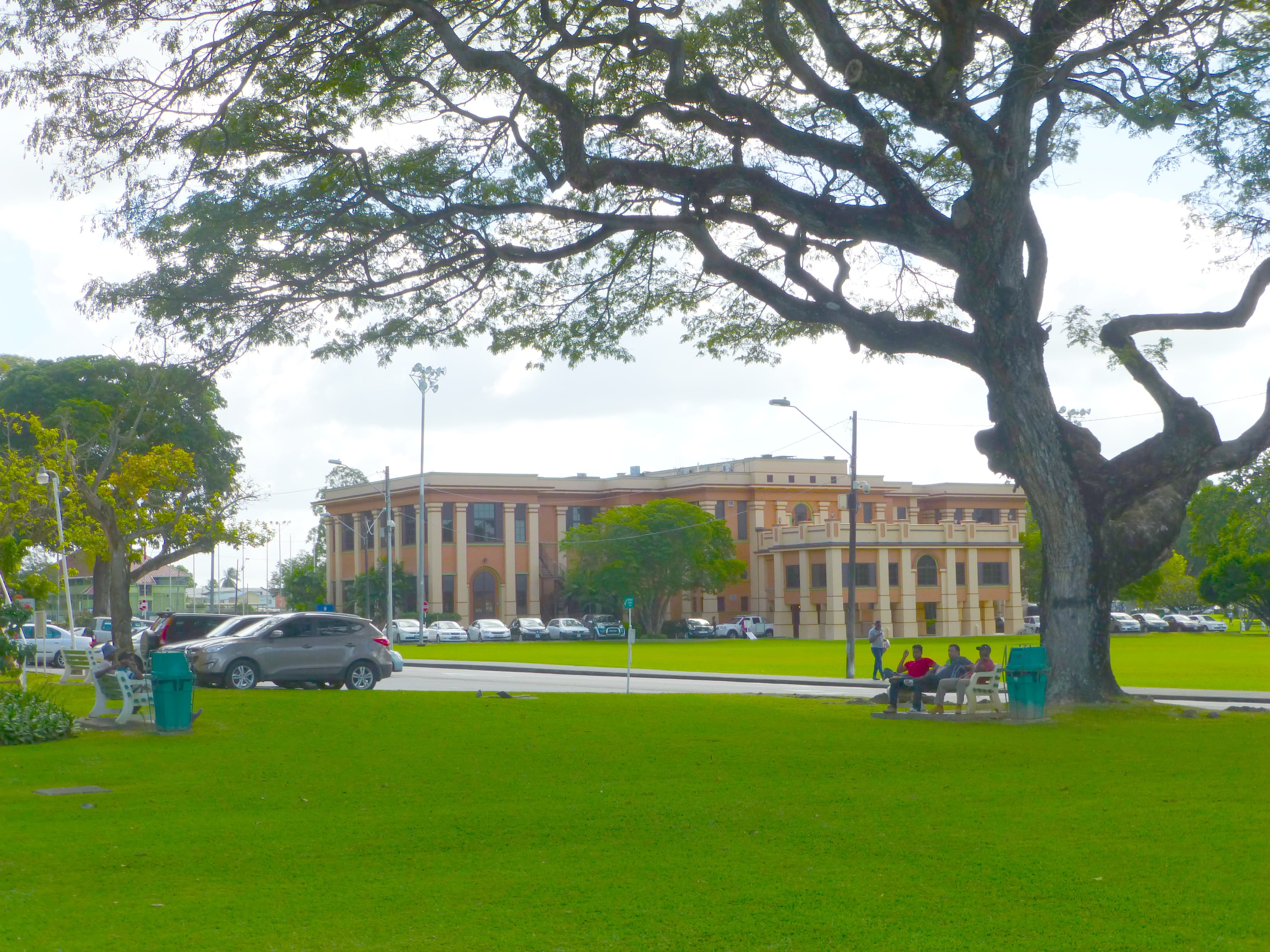
Baldur Brückner, CC BY-SA 4.0, via Wikimedia Commons
Study
Thinking about studying somewhere else in CARICOM? Here's what actually applies, and where we can still help.
Last updated: . Student visa rules are set country by country and change without notice. Confirm the current position with the destination country’s immigration authority and the institution before you act on anything here.
CSME doesn’t cover studying
The CSME Skills Certificate and full free movement are both about the right to work, not study. The CARICOM Special Visa that some CARICOM nationals travel on explicitly does not permit study either. In practice, that means a student moving to another CARICOM country has to apply directly to that country’s own immigration authority for a student visa or student permit, separately from anything CSME covers.
Exactly what’s required, and which office handles it, varies by country and isn’t standardised the way the CSME certificate is. Confirm the current process with the immigration authority in the country you’re headed to, and with the school itself, since some of the paperwork usually starts there.
One university, five campuses
A lot of “studying in another CARICOM country” is really studying at a University of the West Indies (UWI) campus outside your own country. UWI is a single regional university shared across CARICOM, with campuses in:
Mona ↗
Jamaica
St. Augustine ↗
Trinidad and Tobago
Cave Hill ↗
Barbados
Five Islands ↗
Antigua and Barbuda
Open Campus ↗
Online, region-wide
UWI offers CARICOM-wide regional scholarships open to nationals of any member state, on top of campus-specific ones. Being a regional university doesn’t remove the immigration step, though: a CARICOM national studying at a UWI campus outside their own country still needs that country’s own student visa or permit, the same as at any other school.
Beyond UWI: other universities and colleges, country by country
Every one of our destination countries also has at least one national college or university, and several host private universities of their own, some serving mainly international students. A number of the smaller islands are known for hosting offshore medical schools, degree-granting institutions that also usually offer bachelor’s degrees in nursing and other health sciences alongside the MD.
Antigua and Barbuda
- American University of Antigua (AUA) ↗: MD, plus a Bachelor of Science in Human Health Sciences for MD-track students who don't already hold a bachelor's degree.Courses offered:Medicine (MD)Human Health Sciences
- University of Health Sciences Antigua (UHSA) ↗: MD, plus a 3-year Bachelor of Science in Nursing through its Macedonia School of Nursing.Courses offered:Medicine (MD)Nursing
Barbados
- Ross University School of Medicine ↗: MD; relocated from Dominica to Bridgetown in 2019.Courses offered:Medicine (MD)
- American University of Integrative Sciences (AUIS) ↗: MD and a Bachelor of Medical Sciences (BMSc).Courses offered:Medicine (MD)Medical Sciences
Belize
- University of Belize ↗: The national public university, with bachelor's degrees across its four faculties: Education and Arts, Health Sciences, Management and Social Sciences, and Science and Technology.Government / publicCourses offered:EducationHealth SciencesNursingBusinessManagementSocial SciencesScienceTechnology
- Galen University ↗: A private university with bachelor's degrees through its Faculty of Business & Entrepreneurship, Faculty of Education, and Faculty of Arts, Science and Technology.Courses offered:BusinessAccountingMarketingEconomicsEntrepreneurshipEducationArtsScienceTechnology
Dominica
- Dominica State College ↗: The national public college, chartered to award bachelor's degrees across arts, sciences and technical education, including a BSN and a BA in English.Government / publicCourses offered:NursingEnglishArtsBusinessHospitalityTourismNatural SciencesSocial SciencesTechnical Education
- All Saints University ↗: MD, plus bachelor's degrees in nursing and medical/diagnostic imaging.Courses offered:Medicine (MD)NursingMedical and Diagnostic Imaging
Grenada
- St. George's University (SGU) ↗: Best known for medicine and veterinary medicine, but its School of Arts and Sciences also offers bachelor's degrees in accounting, biology, international business, IT, management, nursing, psychology and sociology.Courses offered:Medicine (MD)Veterinary MedicineAccountingBiologyInternational BusinessInformation TechnologyManagementNursingPsychologySociology
Guyana
- University of Guyana ↗: The national public university, with bachelor's degrees across nine faculties: agriculture and forestry, medicine, engineering, education, social sciences and more.Government / publicCourses offered:AgricultureForestryMedicineEngineeringEducationSocial SciencesNatural SciencesEnvironmental StudiesBusinessEntrepreneurship
Jamaica
- University of Technology, Jamaica (UTech) ↗: A public university with bachelor's and graduate degrees across engineering, business, computing, architecture, pharmacy and law.Government / publicCourses offered:EngineeringBusinessComputingInformation TechnologyArchitecturePharmacyLaw
- Northern Caribbean University (NCU) ↗: A private Seventh-day Adventist university with bachelor's degrees across sciences, humanities, business and education.Seventh-day AdventistCourses offered:SciencesHumanitiesBusinessEducation
- The Mico University College ↗: Long focused on teacher training; offers Bachelor of Education degrees in primary, early childhood, special and physical education, plus other disciplines.Government / publicCourses offered:EducationPrimary EducationEarly Childhood EducationSpecial EducationPhysical Education
St. Kitts and Nevis
- University of Medicine and Health Sciences (UMHS) ↗: MD, based in Basseterre.Courses offered:Medicine (MD)
- Windsor University School of Medicine ↗: MD, based in Cayon.Courses offered:Medicine (MD)
- Ross University School of Veterinary Medicine ↗: Doctor of Veterinary Medicine (DVM), based in Basseterre.Courses offered:Veterinary Medicine (DVM)
Saint Lucia
- American International Medical University (AIMU) ↗: MD and a BSN completion program, based in Gros Islet.Courses offered:Medicine (MD)Nursing
- Monroe College, Saint Lucia campus ↗: Bachelor's degrees through its Schools of Allied Health Professions, Business and Accounting, Criminal and Social Justice, Hospitality Management, and Information Technology.Courses offered:Allied HealthBusinessAccountingCriminal JusticeSocial JusticeHospitality ManagementInformation Technology
St. Vincent and the Grenadines
- American University of St. Vincent School of Medicine (AUS) ↗: MD, plus bachelor's degrees in nursing, health sciences, accounting and IT/cybersecurity.Courses offered:Medicine (MD)NursingHealth SciencesAccountingInformation TechnologyCybersecurity
Suriname
- Anton de Kom University of Suriname ↗: The national public university (instruction in Dutch), with bachelor's degrees across six faculties: medicine, law, engineering, economics, education and the sciences.Government / publicCourses offered:MedicineLawEngineeringEconomicsEducationScience
Trinidad and Tobago
- University of Trinidad and Tobago (UTT) ↗: A public university with bachelor's degrees across engineering, technology, business, education and the arts.Government / publicCourses offered:EngineeringTechnologyBusinessEducationArtsFine ArtsAgriculture
- University of the Southern Caribbean (USC) ↗: A private Seventh-day Adventist university with bachelor's degrees across business, science, education and the arts.Seventh-day AdventistCourses offered:BusinessScienceEducationArtsNursing
This list covers degree-granting institutions (bachelor’s level and up) in the countries we cover. Accreditation, tuition and admission requirements vary widely, especially at the private and offshore medical schools, so confirm current accreditation status and licensing pathways directly with the institution before applying.
What’s usually asked for
Requirements differ by country, but most student visa or permit applications across the region ask for some combination of:
- An acceptance or admission letter from the school you're enrolling at
- A valid passport
- Proof you can cover tuition and living costs for your stay
- A medical certificate or police certificate, in some countries
- Passport photographs and a completed application form
Treat this as a starting point, not a checklist to rely on: confirm the exact requirements with the destination country’s immigration authority and the school before you apply.
Who this is for
- CARICOM nationals considering a course in another CARICOM country
- Students heading to a UWI campus outside their own country
- Anyone holding an offer and now facing the visa, travel and arrival side
- Parents organising a move for a son or daughter starting a course
- Graduates who will want the Skills Certificate later, once they start looking for work
From application to your first semester, we can help
Whichever school on this page you choose, you don't have to coordinate it all yourself. We help get you prepared and ready to go, from the application itself through to being settled in for your first semester.
What we help with
- Researching institutions and what each one asks applicants for
- Working through the school's application and admission timeline with you
- Organising and checking the documents you need to gather
- Explaining the student visa or permit process for your destination country
- Cost of living, banking and what to expect once you land, country by country
- Flights, housing for your first weeks or first semester, and airport transfers
- Opening a bank account once you arrive, so you are not living on a foreign card
What we do not decide
- Admission. The institution decides who it accepts, on its own criteria.
- Scholarships and funding. Awards are made by the institution or the funding body.
- Student visas and permits. The destination country's immigration authority decides.
- Accreditation and licensing outcomes, particularly at private and offshore medical schools.
- Tuition fees, deadlines and entry requirements, which the institution sets and can change.
And when you graduate and start looking for work, that’s exactly when the CARICOM Skills Certificate comes in. Read the Skills Certificate guide →
What we will ask you
Have these to hand and the first conversation goes a lot further. None of it is a test, and “I do not know yet” is a perfectly good answer to most of it.
- 1What country and institution are you considering?
- 2Have you received an acceptance letter?
- 3What travel date are you targeting?
- 4Do you need accommodation or airport transfer help?
- 5What documents do you still need to organise?
- 6Are you travelling alone or with family?
Please do not send passport numbers, bank details or other sensitive information by website form or public message. Once we are talking, we will explain how to share documents securely.
You don’t have to do this yourself
I can handle the preparation for your studies abroad for you. I work out what your country and your destination actually ask for, get the paperwork in order, and keep it moving, so you are not the one chasing offices and re-reading forms to figure out what happens next.
Planning to study in another CARICOM country?
Get guidance for your move, travel and settling-in arrangements. We work through what your destination and your institution ask for, then handle the practical side around it.
Get a personalised document plan, estimated timeline and practical next steps for your destination.
What it costs
$100
A Move Planning Consultation covering your study plans, whether that is the application, somewhere to stay, or getting there, is $100. Tell us where you are headed and we will map out what applies.
Common questions about studying in CARICOM
Does the CARICOM Skills Certificate cover studying?
No. The Skills Certificate and CSME free movement are about the right to work. A student normally has to apply to the destination country's own immigration authority for a student visa or permit, separately from anything CSME covers.
Can you get me admitted to a university?
No. Admission is decided by the institution alone. What we do is help you research options, understand what each one asks for, organise your documents, and handle the travel and arrival side once you have an offer.
Do you arrange scholarships?
No. Scholarships are awarded by institutions and funding bodies on their own criteria. UWI publishes CARICOM-wide regional scholarships open to nationals of any member state, and it is worth applying directly, but we have no part in those decisions.
Do I need an acceptance letter before contacting you?
No. Plenty of people come to us while still deciding where to apply. An acceptance letter changes what we can do next, since most student visa applications require one, so tell us either way.
Can you help my family come with me?
We can help plan the travel and accommodation for everyone coming. Whether dependants are permitted to accompany a student, and on what terms, is set by the destination country's immigration rules, so that has to be checked country by country.
Is studying at a UWI campus in another country simpler because UWI is regional?
Academically it is one university across CARICOM, which helps. It does not remove the immigration step: a CARICOM national studying at a UWI campus outside their own country still needs that country's student visa or permit, the same as at any other school.
Ready to start, or still deciding?
Either is fine. Tell us where you are thinking of studying and how far you have got. You can reach us on WhatsApp, through the chat, or by email at info@expeditionswithjo.com.
Admission decisions are made by the institution. Student visa and immigration decisions are made by the destination country’s authorities. We help you prepare for both and handle the practical arrangements around them.