Moving to Dominica
The "Nature Isle of the Caribbean": a mountainous, volcanic island built for hikers and divers, not beach loungers.
Dominica is a mountainous, volcanic island of rainforest, rivers and hot springs, and the only Eastern Caribbean island still home to a Kalinago (Carib) community, the region's last pre-Columbian population. It's less developed for mass tourism than most of its neighbours and has few sandy beaches: the draw here is hiking, diving and nature, not lounging.
Capital
Roseau
Population
≈65,500–66,000 (2025–2026 estimate)(Worldometer / World Population Review)
Area
≈750 km²
Independence
3 November 1978, from the United Kingdom
Independence Day falls on 3 November each year. Next marked in 49 days, 48 years on.
Coordinates
15.30°N, 61.39°W(view on Google Maps)
Languages
English (official), Dominican Creole French (Kwéyòl), widely spoken
Currency
Eastern Caribbean dollar (XCD), fixed at EC$2.70 to US$1. US dollars are often accepted in tourist areas.
Median age
≈35.6 years (2023 estimate)
Age structure
0–14 years: ≈18–21%. 15–64 years: ≈66–69%. 65 years and over: ≈13–14%.
Ethnic composition
African descent ≈85%, mixed ≈9%, indigenous Kalinago (Carib) ≈4%, other/unspecified ≈3%(CIA World Factbook (2011 census, most recent available))
Government
Parliamentary republic: one of the few CARICOM states never to retain the British monarch as head of state after independence. A President, elected by the House of Assembly, is head of state; a Prime Minister is head of government.
Where people live
Most people live in and around Roseau and the southwest. Portsmouth is the second-largest town. Dominica is the only Eastern Caribbean island where a Kalinago community survived colonisation: around 3,000–3,500 people live in the Kalinago Territory on the east coast, though only a small number are considered "pure" Kalinago after generations of intermarriage.
Cost of living
Rent, 1BR, ordinary local market
≈US$300–600/month in Portsmouth, Calibishie, Salisbury and other towns and villages outside Roseau
Rent, 1BR, marina / tourist areas
≈US$350–800+/month in and around Roseau, more for newer or waterfront/expat-oriented units
Groceries, one person
≈US$200–350/month; local produce and root crops are much cheaper than imports
Utilities, small apartment
≈US$75–200/month for electricity and water (more with regular air conditioning), plus roughly US$55–85/month for fixed broadband internet
Inexpensive restaurant meal
≈US$5–12 (rice and peas, callaloo, a plate of chicken or fish)
Mid-range dinner for two
≈US$30–60, more at upscale hotel or waterfront restaurants
Modest monthly budget, single person
≈US$1,200–1,600/month all-in (modest rental, local food, limited AC, public transport)
Comfortable monthly budget, single person
≈US$1,600–2,500/month all-in (good location, some dining out, AC, regular transport)
Dominica is one of the more affordable Eastern Caribbean islands, with cheap local food but pricier imports and electricity. A premium lifestyle (luxury rental, frequent dining and tours) can run US$3,500–5,000+/month. Minibus fares run roughly US$0.50–1.50 per trip.
Sources: Relocation and expat relocation guides, as of August 2026. Cost-of-living figures are estimates that shift with the season and the neighbourhood; treat them as a starting point, not a quote.
Moving to Dominica
Visas, healthcare, taxes and where people settle, for anyone actually planning the move.
Visa and work permit
Dominica is one of the four CARICOM countries with full free movement: nationals of Dominica, Barbados, Belize and St. Vincent and the Grenadines can move to and work in each other's countries without any extra application. Dominica is also one of six OECS member states with a separate, overlapping free-movement arrangement (Antigua and Barbuda, Dominica, Grenada, St. Kitts and Nevis, Saint Lucia and St. Vincent and the Grenadines), so citizens of Antigua and Barbuda, Grenada, St. Kitts and Nevis and Saint Lucia can also settle and work here without a permit. Other CARICOM nationals go through the CSME Skills Certificate instead; see the CSME steps for Dominica for that process. Non-CARICOM visitors typically get a few weeks to a few months visa-free depending on nationality, and everyone must file Dominica's online ED (embarkation/disembarkation) card before arrival. A non-CARICOM national taking up a job needs a work permit tied to a specific employer, who has to show the role couldn't reasonably be filled locally.
Permanent residency
A one-year, renewable Temporary Residence Permit is open to people who can show they can support themselves and either own or rent property on the island. Dominica also runs a well-known Citizenship by Investment programme: a non-refundable contribution to the Economic Diversification Fund starting at US$200,000 for a single applicant, or a qualifying real estate purchase from US$200,000 held for several years, with decisions typically taking 3 to 6 months.
Healthcare
Princess Margaret Hospital in Roseau, with around 200 beds, is the country's main hospital; care at public facilities is free or heavily subsidised for residents, and a specialist visit at a private clinic runs roughly US$50-150. Specialist and complex treatment is limited on-island, so serious cases are often referred to Martinique, Barbados or Trinidad, which is why most movers carry international health insurance, roughly US$100-500/month, that includes medical evacuation.
Taxes
Dominica taxes residents only on income sourced in Dominica; foreign income generally stays untaxed as long as it isn't remitted onto the island, and tax residency itself only kicks in once someone spends more than 183 days a year there. There's no capital gains, wealth or inheritance tax, and no withholding tax on dividends or interest paid to non-residents. VAT runs at 15% generally, dropping to 10% for hotels and tourism services.
Where people settle
Roseau
The capital and largest town, with roughly 14,700 people and the best access to schools, healthcare and other services. Three-bedroom rentals run roughly US$740-1,300/month.
Portsmouth
A livelier, younger town in the north, home to Ross University's medical school. Rentals run roughly US$450-925/month, about 20 minutes from the airport.
Marigot
A quiet east-coast village and one of the cheapest places to rent, roughly US$185-445/month, though services nearby are limited.
Scotts Head
A south-coast diving hub about 30 minutes from Roseau, with rentals ranging roughly US$300-1,480/month.
Kalinago Territory
The east-coast home of the indigenous Kalinago people, offering a distinct cultural setting rather than a typical base for movers, with more basic infrastructure.
Sources: Expat.com and Global Citizen Solutions (Economic Diversification Fund guide), as of August 2026. Visa, residency and tax rules change: confirm current requirements with the relevant government agency before acting on them.
We can handle this for you
Visa or CSME paperwork, banking, housing, flights and everything else needed for a successful move to Dominica: this is exactly what we do every day. Reach out and we’ll walk you through every step.
Places to see
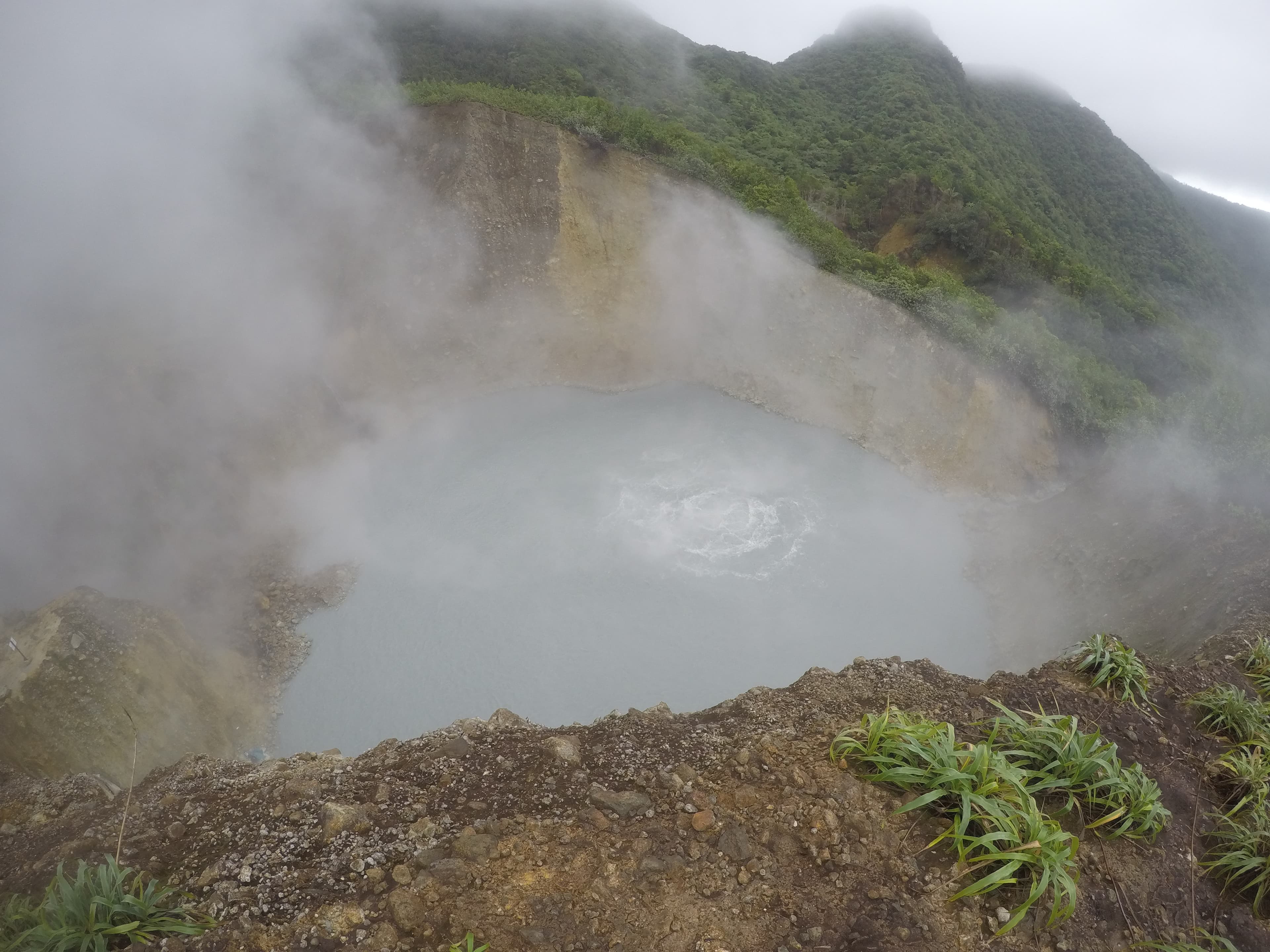
Boiling Lake
The world's second-largest thermally active lake, a churning, mist-covered crater in Morne Trois Pitons National Park (a UNESCO World Heritage Site), reachable only by a strenuous 6–8 hour round-trip hike.
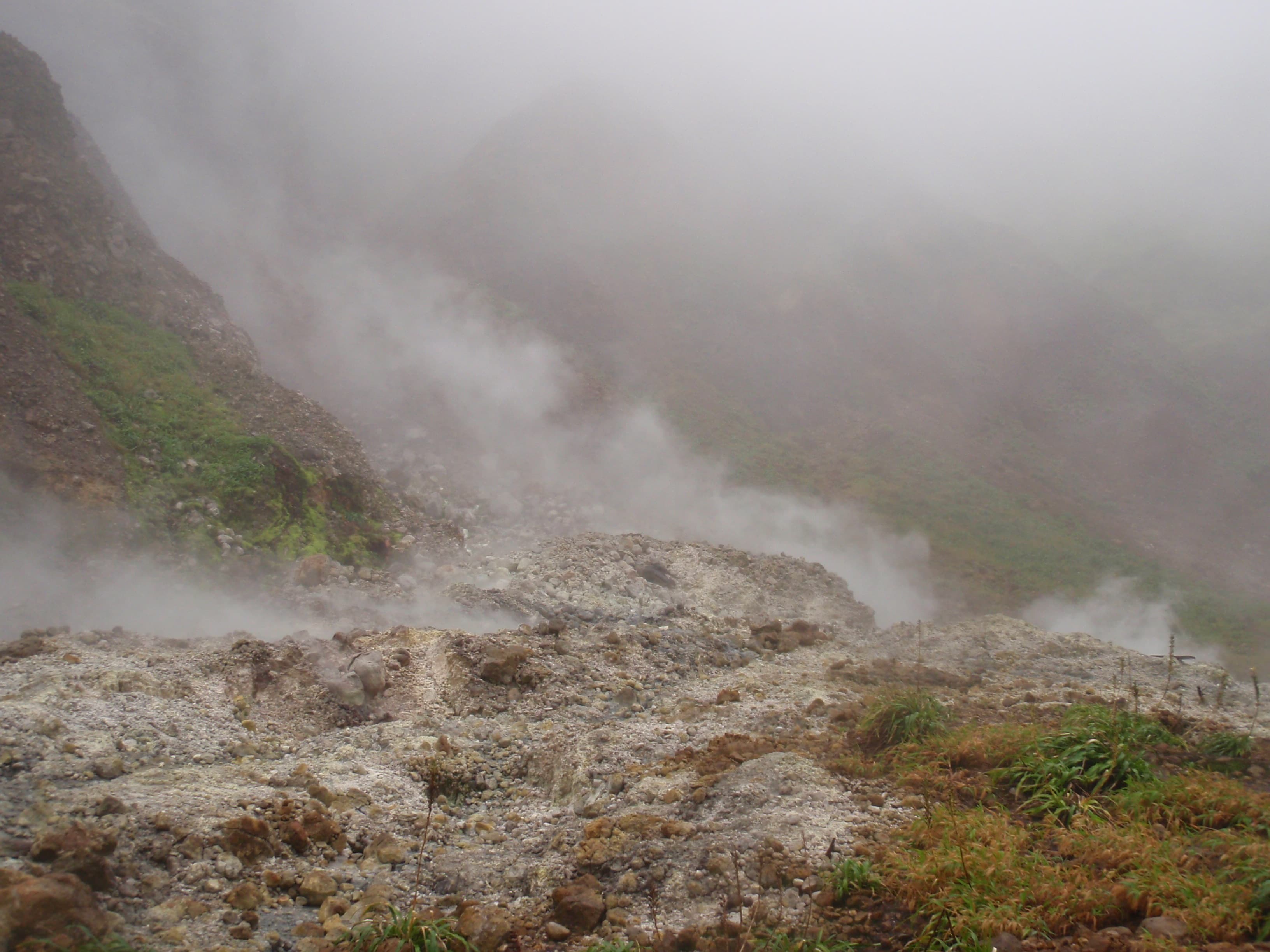
Valley of Desolation
Surreal volcanic terrain of sulphur vents, steaming mud pools and hot streams, crossed on the way to Boiling Lake.
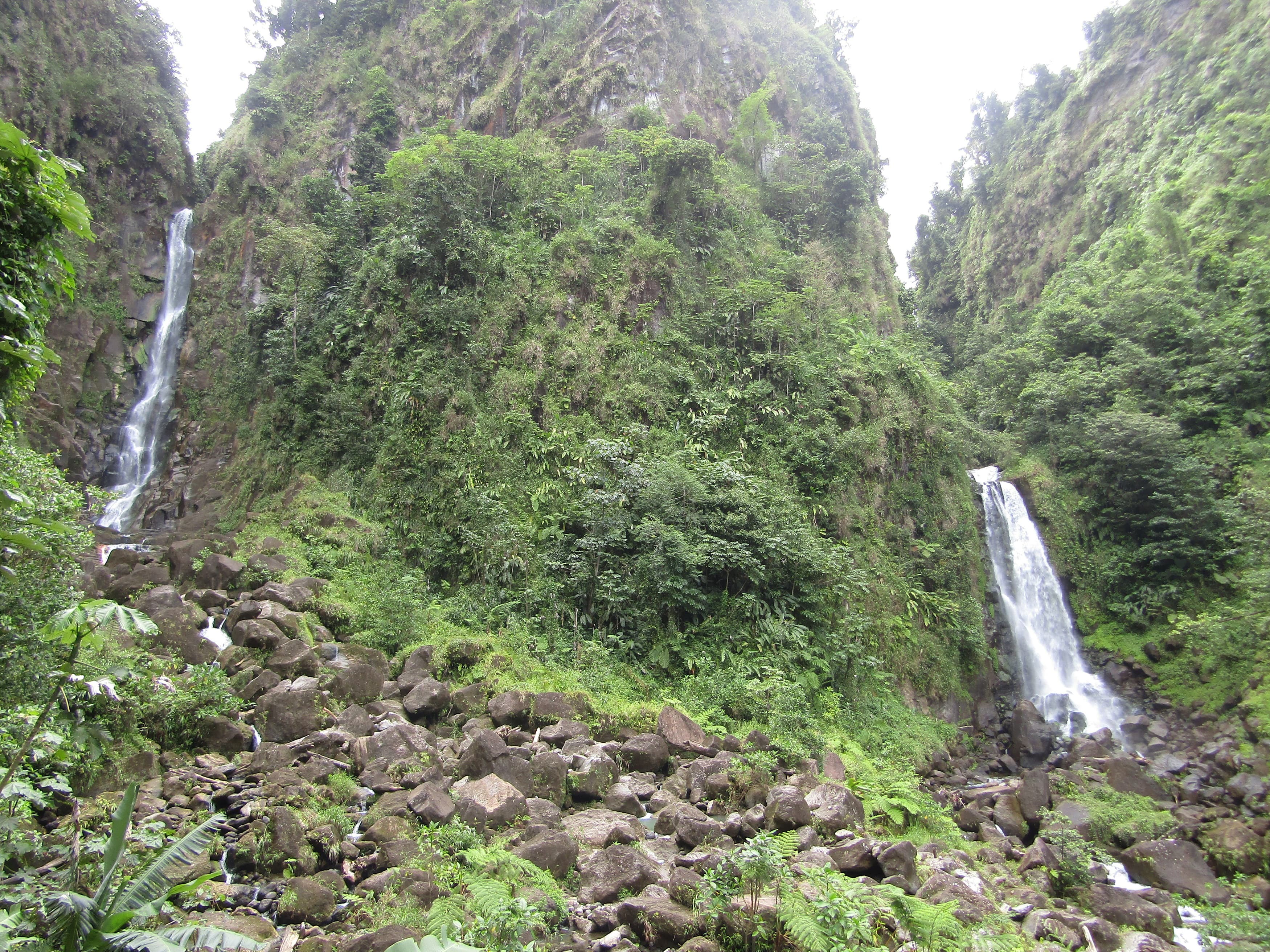
Trafalgar Falls
Twin waterfalls ("Mother" and "Father") near Wotten Waven, among the easiest of Dominica's falls to reach, with swimmable lower pools.
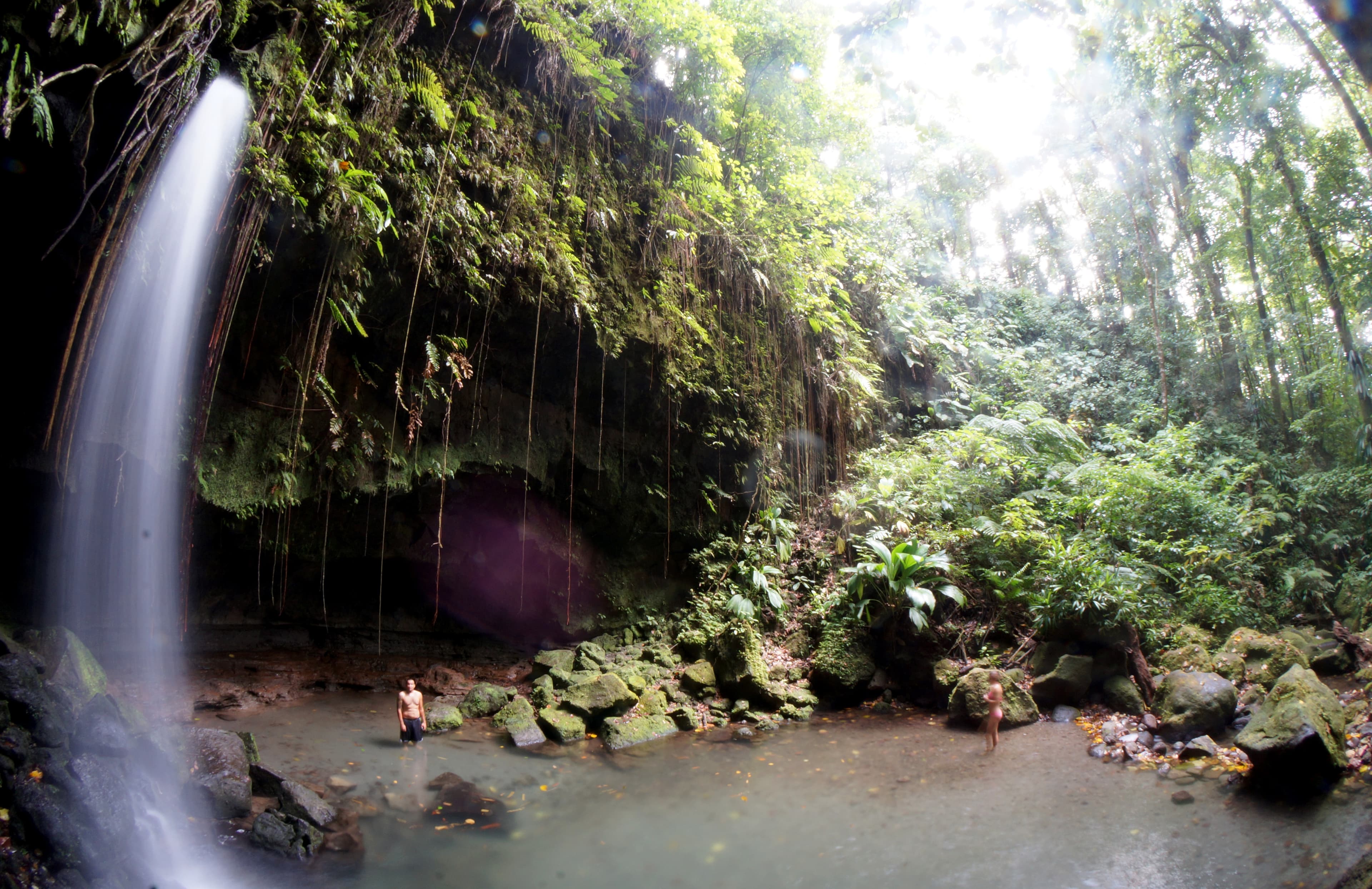
Emerald Pool
A forest-fringed pool and waterfall near Morne Trois Pitons, reached by a short, well-maintained trail.
Ti Tou Gorge & Wotten Waven hot springs
A narrow canyon with clear water for swimming, next to Wotten Waven, the village at the centre of Dominica's sulphur hot springs.
Champagne Reef
A shallow dive and snorkel site where underwater volcanic vents send streams of bubbles up through the coral and marine life.
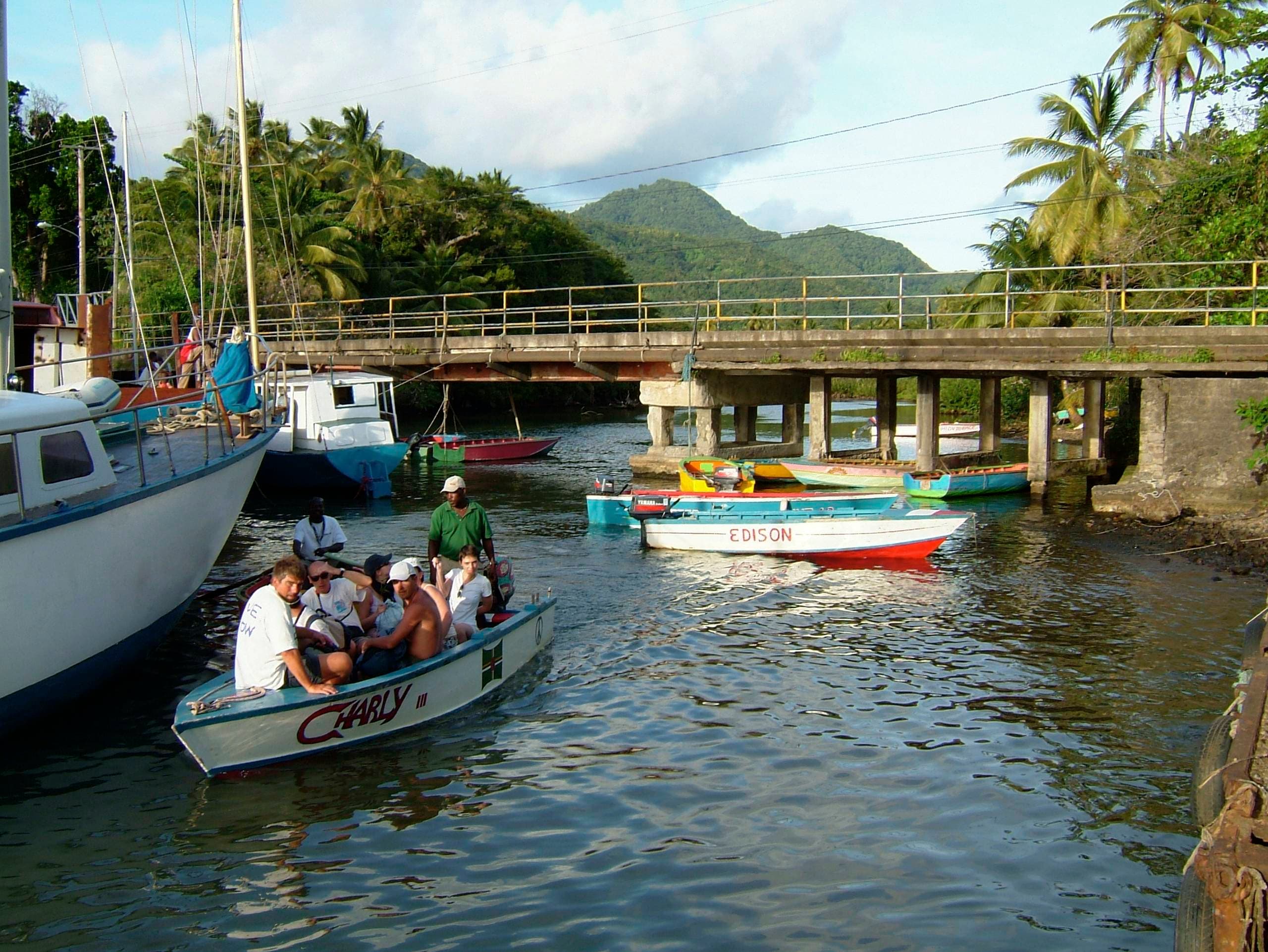
Indian River
A calm, mangrove-lined river near Portsmouth, explored by rowed boat tour (no motors allowed).
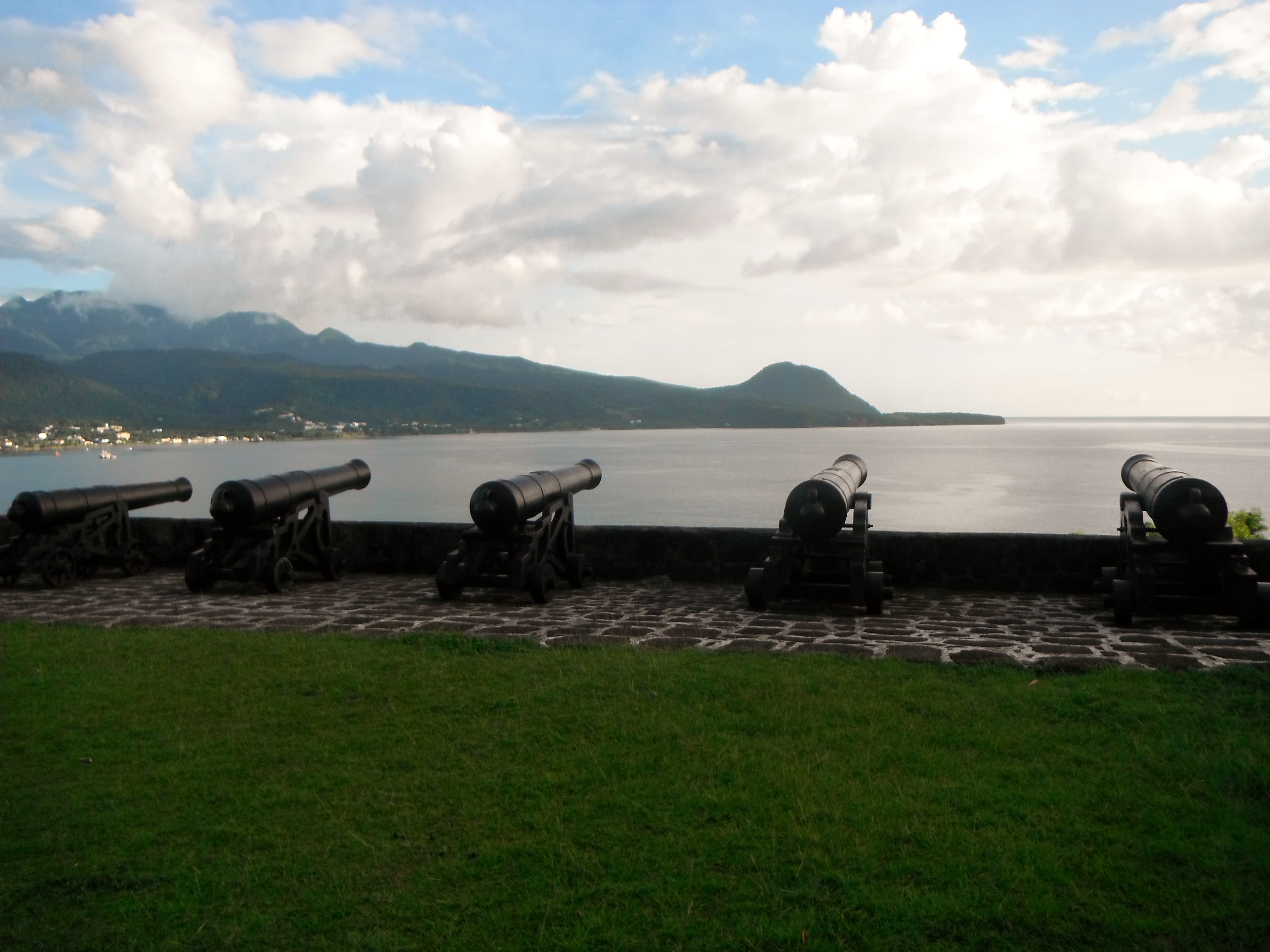
Cabrits National Park & Fort Shirley
An 18th-century British garrison on a former volcanic islet near Portsmouth, now a national park with coastal hiking trails.
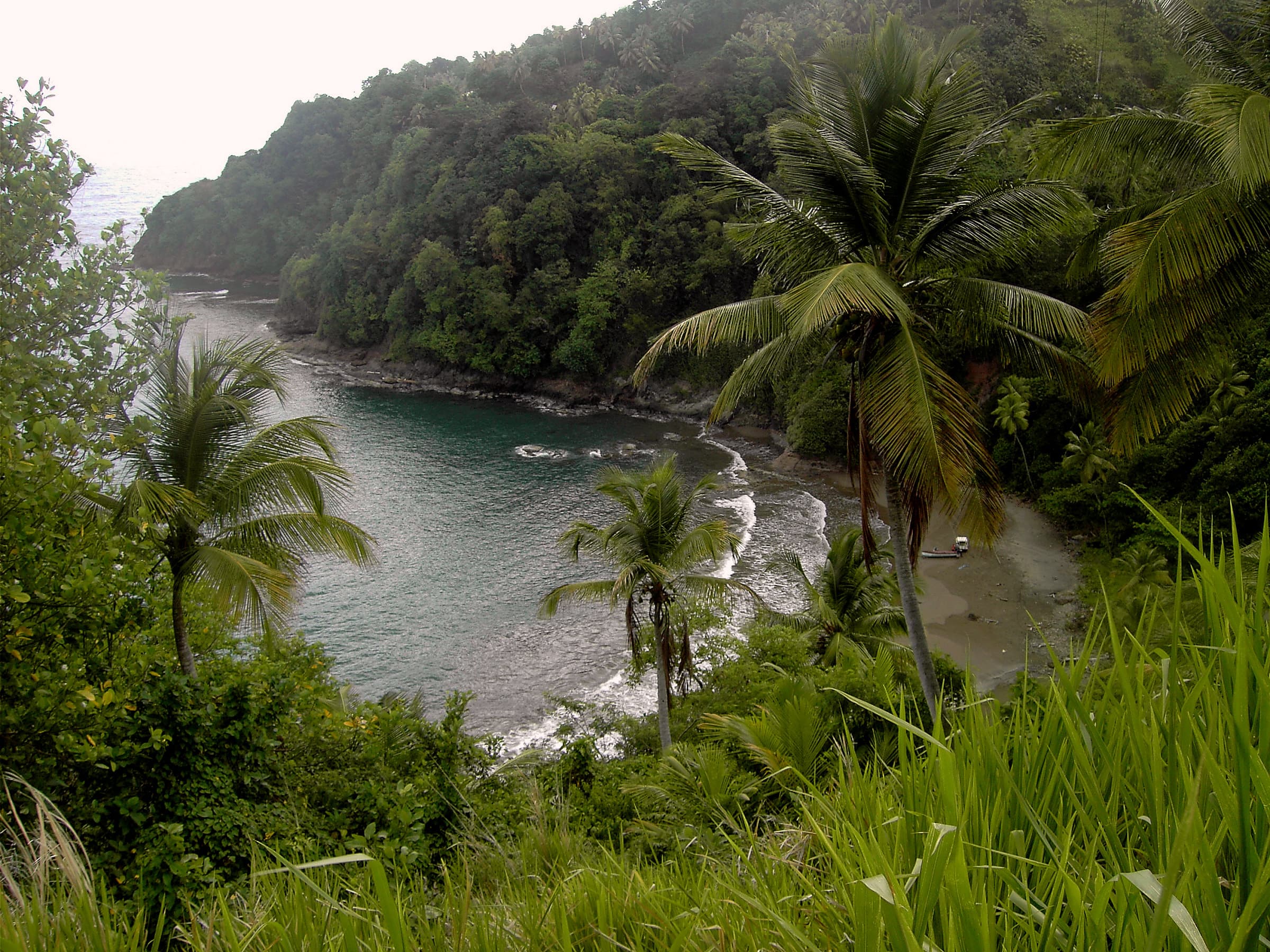
Kalinago Territory
Home to the Caribbean's last Kalinago (Carib) community, on the east coast: craft, cultural sites and coastal scenery.
Experiences to have
The Boiling Lake hike
A full-day, guided trek through rainforest and the Valley of Desolation to the edge of the lake, one of the Caribbean's most demanding and iconic hikes.
Waterfall hikes and swims
Trafalgar Falls, Emerald Pool and others, for hiking, swimming and picnicking in forest settings.
Snorkelling or diving Champagne Reef
Swimming over volcanic vents that send up constant bubbles, alongside coral and reef fish.
River tubing and canyoning
Floating down jungle rivers and exploring canyons with local operators, often with waterfall jumps included.
Whale watching off Scotts Head
Boat trips into deep offshore water, seasonally, to see sperm whales and other cetaceans.
Hiking the Waitukubuli National Trail
A 185km, 14-segment trail across the whole island, the Caribbean's only long-distance hiking trail, walkable in day-length sections or end to end.
Local dishes to try
Callaloo
A leafy-green soup, similar to spinach, cooked with okra, coconut milk and often crab or saltfish.
Crab back
Seasoned crab meat stuffed back into the shell: a festive, flavourful local specialty.
Rice and peas with stewed fish or chicken
The everyday plate, usually with fried plantain or provision (boiled root vegetables) on the side.
Fresh seafood
Grilled or stewed fish, and lobster in season, especially around Portsmouth and Scotts Head.
Mountain chicken (historical note, not a recommendation)
Dominica's traditional national dish is actually a large frog (Leptodactylus fallax), not poultry. A chytrid fungus outbreak in 2002 wiped out over 80% of the wild population within 18 months, and it's now Critically Endangered: around 100 individuals remain in the wild across Dominica and Montserrat combined. Hunting has been banned since 2004. It's mentioned here for cultural context, not as something to order.
Best places to eat
Lacou Melrose HouseRoseau
A charming restaurant in the historic Melrose House, with a chalkboard menu that changes with what's fresh.
Petit Paris Restaurant & BarRoseau
French-Caribbean cuisine in the capital.
Kozy's NicheRoseau
A local favourite blending Italian and Caribbean cooking: lionfish and grilled mahi-mahi are the dishes to order.
Anthem, motto and pledge
National motto
“Après Bondie C'est La Ter (Kwéyòl for "After God is the Earth")”
National anthem
“Isle of Beauty, Isle of Splendour”, words by Rev. Wilfred Oscar Morgan Pond, music by Lemuel McPherson Christian. Adopted 1967, at statehood; retained at independence in 1978.
Listen / read more →National pledge
Before God and all mankind, I pledge allegiance to the flag of the Commonwealth of Dominica and to the Sovereign Republic for which it stands; my love, my loyalty and skills, in the service of Dominica and my fellow citizens. I promise to work diligently and to help build a prosperous and peaceful Nation.
Source: Government of Dominica (dominica.gov.dm), written by Peter Israel
Dominica: frequently asked questions
How do I move to Dominica as a CARICOM national?
The CARICOM Skills Certificate (CSME) is the main route to live and work in Dominica without a work permit. See the CSME steps for Dominica for the full application process.
Do all CARICOM nationals need the certificate, or is there full free movement?
Dominica is one of four CARICOM countries with full free movement between themselves: Barbados, Belize, Dominica, St. Vincent and the Grenadines. Nationals of those four can live and work in Dominica without a CSME Skills Certificate. Everyone else moving to Dominica still needs the certificate.
How much does it cost to visit Dominica?
Dominica is moderate to affordable by Caribbean standards, especially for nature-focused travellers. A budget traveller can expect roughly US$80–120/day (guesthouse or basic hotel, local food, public transport, self-guided hikes); mid-range roughly US$150–250/day (a comfortable hotel or eco-lodge, a mix of local and nicer restaurants, guided tours); luxury US$350+/day (a high-end eco-lodge or boutique hotel, private guides, fine dining). For a longer stay, see the cost-of-living section above for typical monthly rent.
What is the currency and do I need cash?
The currency is the Eastern Caribbean dollar (XCD), fixed at EC$2.70 to US$1. US dollars are often accepted in tourist areas, though change may come back in XCD. Major cards work in many hotels, larger restaurants and some shops in Roseau, but smaller vendors, markets and rural spots often prefer cash. ATMs are available in Roseau and a few other towns but limited elsewhere, so carry cash for villages and trailheads.
Do I need a visa to visit as a tourist?
Many nationalities, including the US, UK, Canada, the EU and CARICOM, can enter visa-free for short stays, often up to 21–90 days, with a valid passport and proof of onward travel. Always confirm current rules with the Dominica Immigration Division or your nearest embassy before travelling.
How do I get around the island?
Inexpensive local buses and minibuses connect Roseau with many villages and key sites, though schedules can be informal. Taxis are available at the airport, cruise port and in Roseau; agree the fare in advance. Rental cars are available at the airport and in Roseau; driving is on the left, and roads are narrow, mountainous and can be challenging, with a 4x4 recommended for the interior. Major hikes like Boiling Lake are usually done through an organised tour, since a guide is effectively required and transport is included.
What local food should I try?
Callaloo (a leafy-green dish, often with crab or saltfish), crab back (stuffed crab shells, a festive specialty), rice and peas with dumplings and stewed fish or chicken, and fresh grilled fish, lobster in season and conch. Dominica's traditional national dish is actually mountain chicken, a large frog now critically endangered and protected since a 2004 hunting ban, so it's not something to order. Try the small local restaurants and cook-shops in Roseau and Portsmouth.
Is Dominica safe for tourists?
Dominica is generally considered one of the safer Caribbean islands for tourists. Violent crime against visitors is rare; petty theft can occur, especially in crowded areas or if valuables are left unattended. Use normal precautions: don't leave bags on the beach, avoid poorly lit areas at night, and secure valuables in your accommodation. For hikes, always use a reputable guide, especially for challenging trails like Boiling Lake. Check your government's current travel advisory before you go.
What is the best time to visit?
December to April is the dry season: the best weather for hiking and diving, and the busiest. May–June and November are shoulder season: good weather, fewer crowds, better deals. July–October is rainier and more humid with higher hurricane risk, and some trails may be muddy or closed. For serious hiking and diving, aim for December–April or May–June.
What should I pack?
Light, breathable clothing, swimwear, sandals and sturdy hiking shoes with good grip, plus sunscreen, a hat, sunglasses and strong insect repellent. Bring a rain jacket or poncho and quick-dry clothes for hikes and waterfalls, and a small daypack with water, snacks and basic first aid for trails. For Boiling Lake or other strenuous hikes, lightweight long trousers and moisture-wicking shirts help, and trekking poles are worth considering.
Any cultural tips I should know?
Dominicans are generally friendly and a little reserved; a polite greeting before asking a question is appreciated. Dress is casual, with modest attire expected in churches and some villages. Tipping 10% in restaurants is standard if a service charge isn't already included, with small tips for guides and drivers welcome. Stay on marked trails, don't litter, and follow your guide's instructions, especially in the volcanic and rainforest areas.
Thinking about moving to Dominica?
Let us help you plan the next step. Get a personalised document plan, estimated timeline and practical next steps for your destination.
Last reviewed August 2026. Cost of living figures, rents, fees and office details change, and the figures here are drawn from the named sources on this page rather than being guaranteed prices. Confirm anything you are relying on before you act on it.