Moving to Saint Lucia
Home of the Pitons, a UNESCO World Heritage volcanic landmark, and a drive-in volcano you can walk right up to.
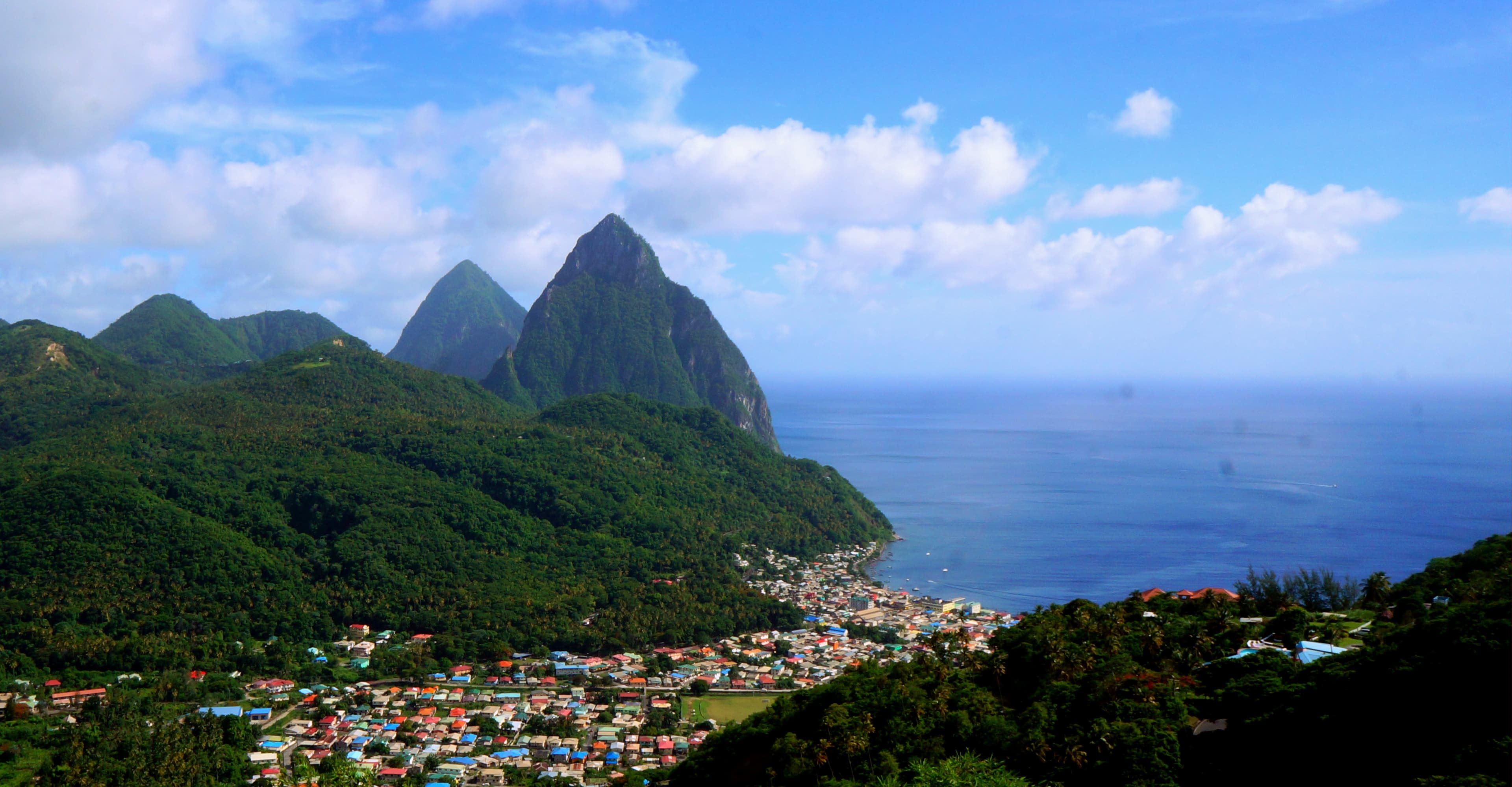
Saint Lucia is a mountainous, volcanic island in the Eastern Caribbean, best known for the Pitons (twin rainforest-covered spires rising straight out of the sea near Soufrière) and for the geothermal activity that also produced Sulphur Springs, billed as the world's only drive-in volcano. Away from the resort corridor around Rodney Bay in the north, the island is steep, green and rural: banana farms, fishing villages, and a strong Kwéyòl (French Creole) culture alongside English.
Capital
Castries
Population
≈168,462 (CIA World Factbook, 2025 estimate) to ≈180,000–184,000 (UN World Population Prospects via Worldometer, 2025–2026 estimate); the two source families diverge by roughly 7–9%(CIA World Factbook / UN World Population Prospects (2024 revision), via Worldometer)
Area
≈617 km²
Independence
22 February 1979, from the United Kingdom
Independence Day falls on 22 February each year. Next marked in 160 days, 48 years on.
Coordinates
13.91°N, 60.98°W(view on Google Maps)
Languages
English (official), Saint Lucian French Creole / Kwéyòl (widely spoken; a Kwéyòl version of the anthem was approved in 2016)
Currency
Eastern Caribbean dollar (XCD), fixed at EC$2.70 to US$1
Median age
≈40.4 years (CIA World Factbook, 2025 estimate; male 38.4, female 40.9); other aggregators put it lower, around 35 years
Age structure
0–14 years: ≈17.9%. 15–64 years: ≈66.7%. 65 years and over: ≈15.4%. (CIA World Factbook, 2025 estimate)
Ethnic composition
Black/African descent ≈85.3%, mixed ≈10.9%, Indo-Caribbean ≈2.2%, White ≈0.6%, Indigenous ≈0.6%(2010 census)
Government
Unitary parliamentary constitutional monarchy within the Commonwealth. King Charles III is head of state, represented locally by a Governor-General; a Prime Minister heads the government.
Where people live
Nearly 40% of the population lives in and around Castries in the north. The rest is spread across smaller towns and villages, including Soufrière and Vieux Fort in the south, with a mountainous, forested interior that stays sparsely populated.
Cost of living
Rent, 1BR, ordinary local market
≈US$325–510/month outside Castries city centre
Rent, 1BR, marina / tourist areas
≈US$510–1,200/month in Castries city centre, Rodney Bay or Gros Islet
Groceries, one person
≈US$200–350/month for basics (rice, bread, chicken, beef, eggs, local produce)
Utilities, small apartment
≈US$90–160/month for electricity alone without heavy AC use, ≈US$160–300+/month with regular AC, plus roughly US$15–30/month water and US$35–70/month internet
Inexpensive restaurant meal
≈US$7–10
Mid-range dinner for two
≈US$55, more at beachfront or resort restaurants in Rodney Bay
Modest monthly budget, single person
≈US$1,500–2,000/month all-in (excluding-rent estimate of ≈US$883–2,500 plus rent)
Comfortable monthly budget, single person
≈US$2,500–3,500/month all-in
A Global Citizen Solutions "basic utilities" bundle quotes just US$115/month for electricity, water and garbage collection combined, but that undercounts electricity: Saint Lucia's utility, LUCELEC, charges roughly EC$0.86–0.91 (≈US$0.32–0.34) per kWh, which works out to the higher electricity-alone figures above for typical household use, so treat the bundled figure cautiously. Overall cost of living runs roughly 22% below the US, driven mainly by cheaper rent (about 74% lower than US averages). Castries and the Rodney Bay/Gros Islet tourist corridor in the north are noticeably pricier than the south (Soufrière, Vieux Fort) or rural interior villages. A family of four should budget roughly US$2,500–4,000/month excluding rent.
Sources: Global Citizen Solutions cost-of-living data, as of August 2026. Cost-of-living figures are estimates that shift with the season and the neighbourhood; treat them as a starting point, not a quote.
Moving to Saint Lucia
Visas, healthcare, taxes and where people settle, for anyone actually planning the move.
Visa and work permit
Saint Lucia is one of six OECS member states with full free movement among themselves (Antigua and Barbuda, Dominica, Grenada, St. Kitts and Nevis, Saint Lucia and St. Vincent and the Grenadines): citizens of those six can settle in Saint Lucia indefinitely and work there without a permit. Other CARICOM nationals still need the CSME Skills Certificate; see the CSME steps for Saint Lucia for that process. Citizens of many other countries can enter visa-free for up to 42 days, but anyone outside those two groups needs a work permit arranged before starting a job.
Permanent residency
Saint Lucia runs a Citizenship by Investment programme: a non-refundable contribution to the National Economic Fund from US$240,000, a real estate purchase from US$300,000, government bonds from US$300,000, or a qualifying business investment from US$1,000,000, though recent backlogs have pushed processing out to 10 to 12 months. Outside that programme, permanent residence generally follows two years of continuous, lawfully maintained status, with naturalisation possible after a further 7 years as a permanent resident.
Healthcare
Owen King EU Hospital in Castries, with around 120 beds, is the main public hospital; St. Jude Hospital in the south has been under reconstruction. Tapion Hospital is the leading private option, with round-the-clock emergency care. International health insurance is standard for movers, with premiums for older applicants (65 and up) starting around US$150/month.
Taxes
People who don't count as Saint Lucia tax residents pay no local tax on worldwide income, capital gains, dividends or inheritance. Tax residents face a progressive scale: nothing on the first XCD 10,000 a year, 10% on the next band up to XCD 20,000, and 30% above that, though a 2025 budget measure removed tax on pension income entirely. VAT runs 12.5% generally, 10% for accommodation and telecoms.
Where people settle
Rodney Bay
The island's biggest concentration of long-term movers, built around a marina and Reduit Beach with the most restaurant choice, though prices run above the island average.
Cap Estate
An upscale, gated area near a golf course and the International School of Saint Lucia.
Castries
The capital, close to government offices and the main hospital, with rents generally running 20-30% below Rodney Bay.
Marigot Bay
A scenic, sheltered bay with its own marina, though public transport and school choice are both limited nearby.
Soufrière
Closest to the Pitons and more affordable, at the cost of being further from specialist healthcare and schools.
Sources: Expat.com and OECS (Free Movement of Persons Regime, official), as of August 2026. Visa, residency and tax rules change: confirm current requirements with the relevant government agency before acting on them.
We can handle this for you
Visa or CSME paperwork, banking, housing, flights and everything else needed for a successful move to Saint Lucia: this is exactly what we do every day. Reach out and we’ll walk you through every step.
Places to see
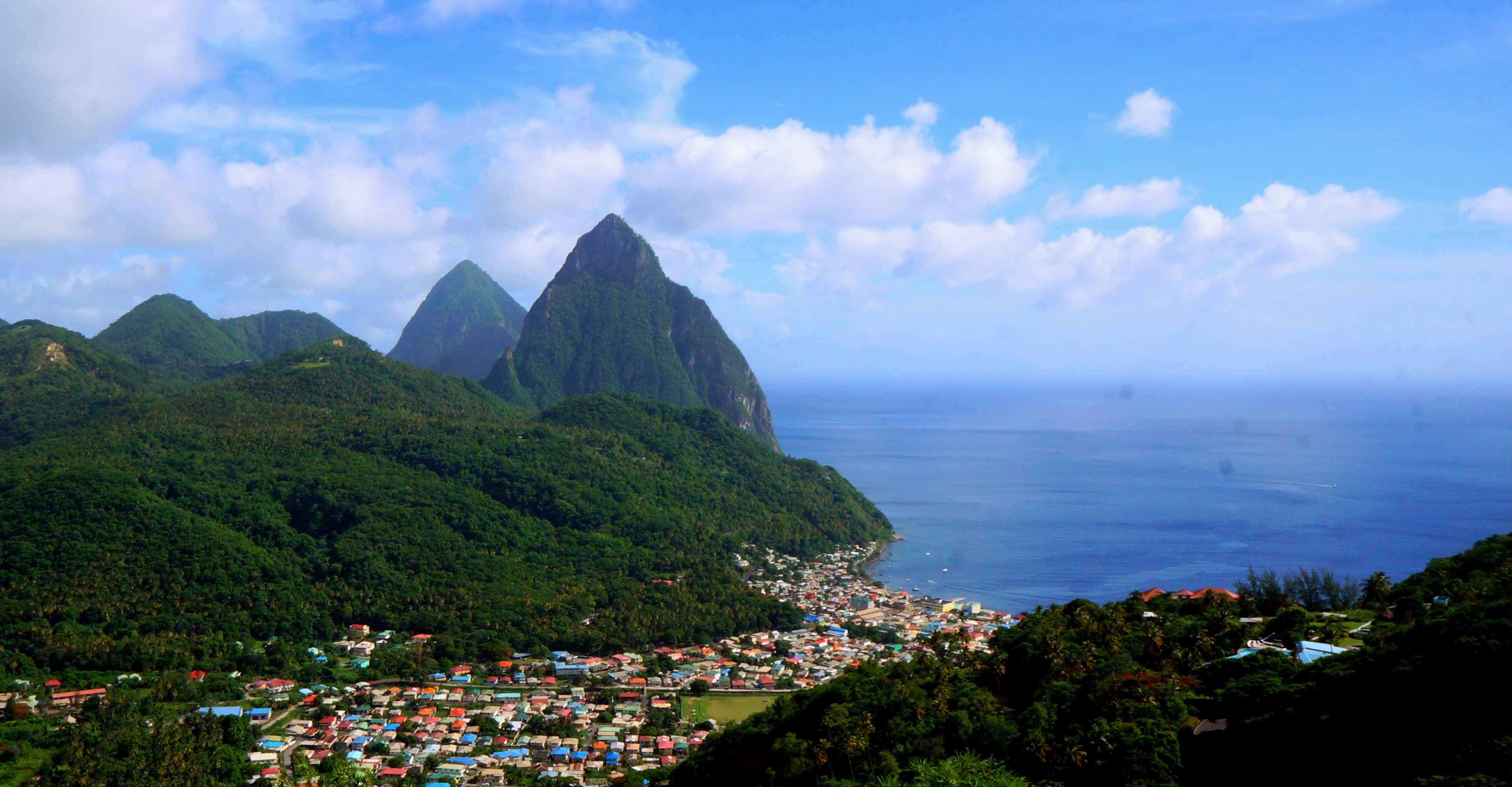
The Pitons (Gros Piton & Petit Piton)
Twin volcanic spires rising directly from the sea near Soufrière, a UNESCO World Heritage Site since 2004 and the island's defining landmark.
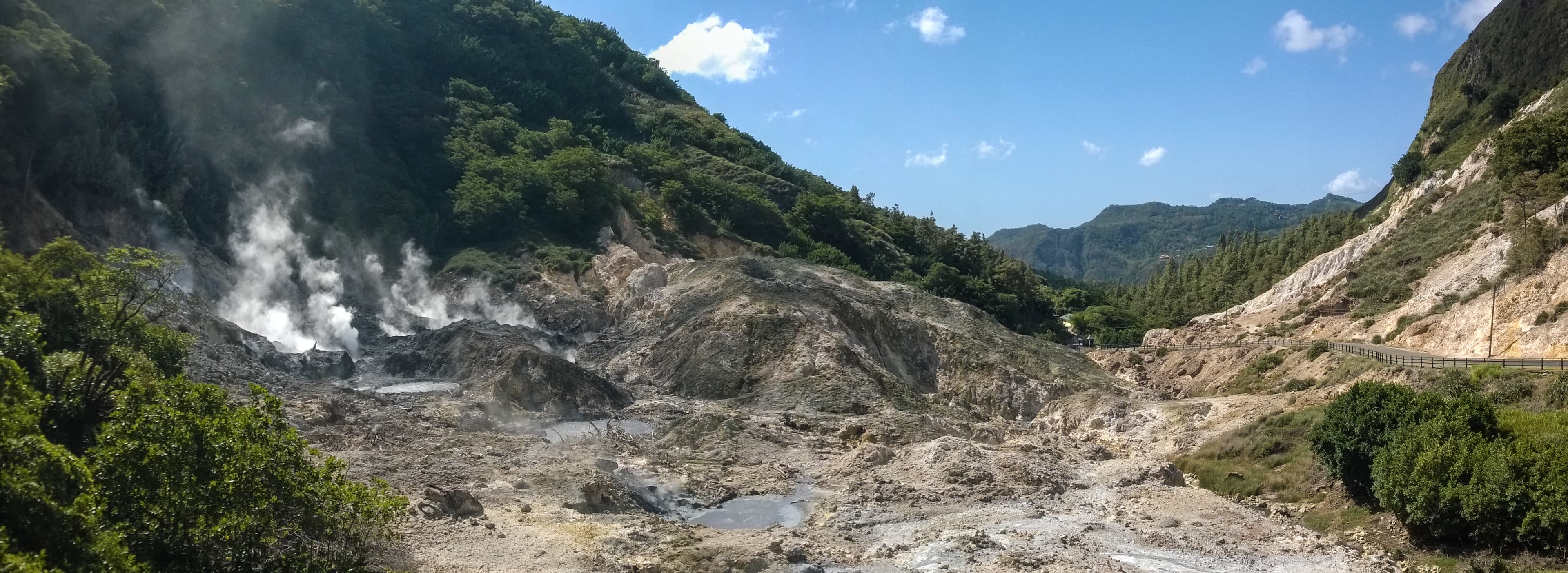
Sulphur Springs Park
Billed as "the world's only drive-in volcano": a dormant volcanic crater you can drive up to and walk around, with bubbling sulphur pools and mud baths.
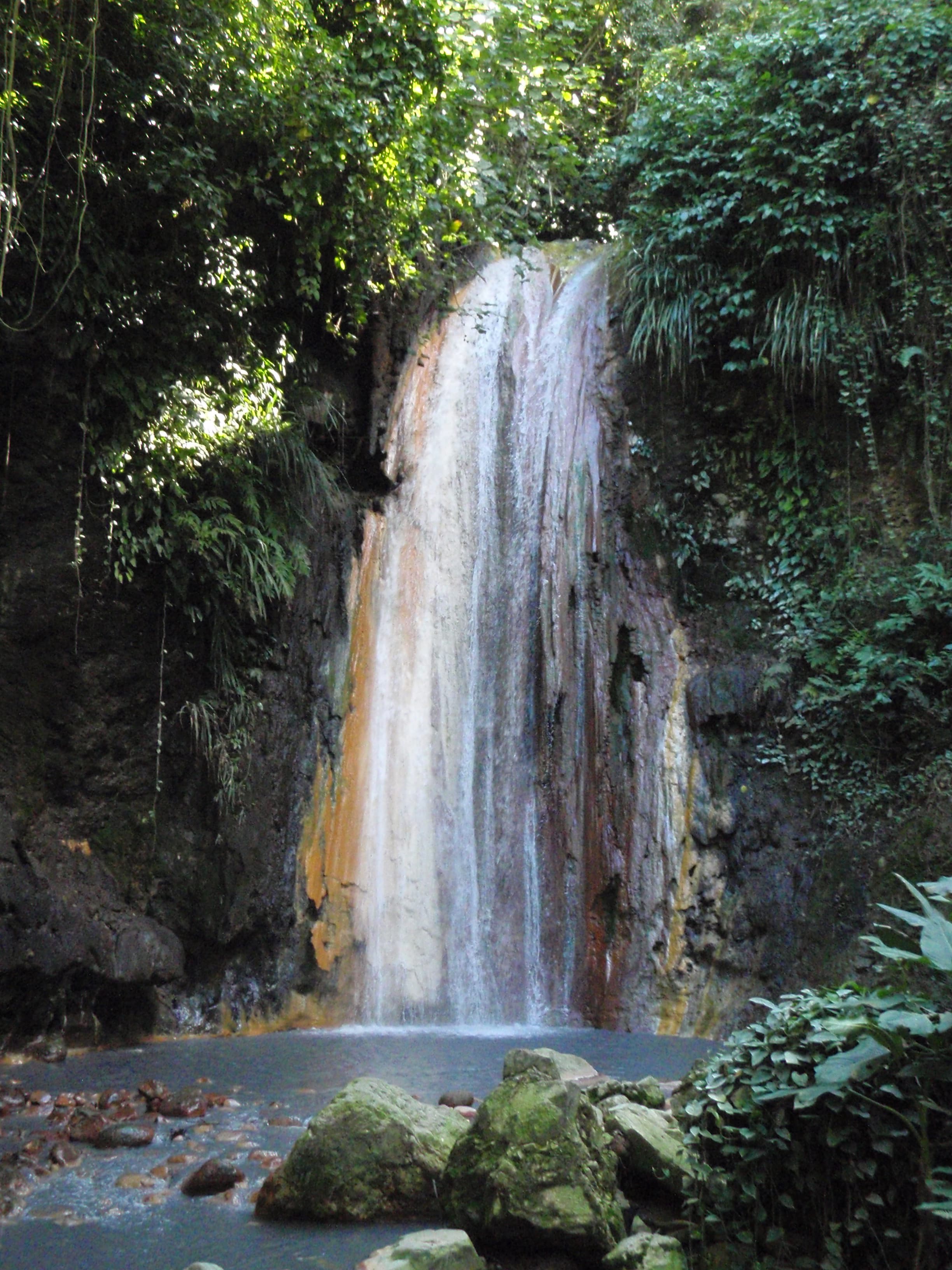
Diamond Falls Botanical Gardens & Mineral Baths
A waterfall stained mineral colours by sulphur and other minerals, set in botanical gardens with warm mineral baths originally built for French troops in 1784.
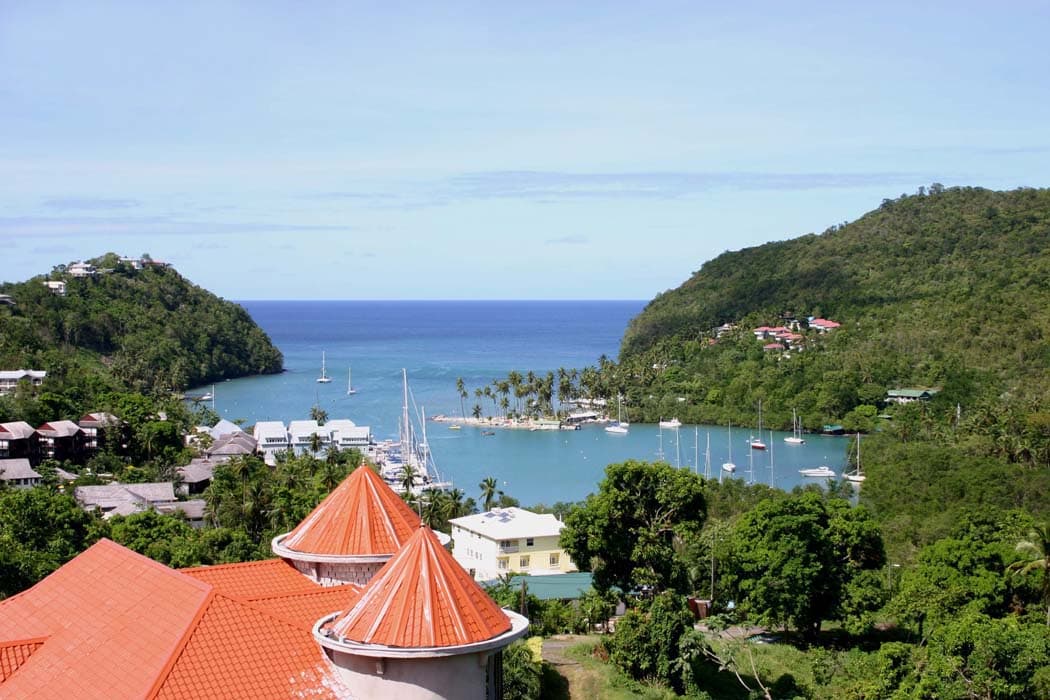
Marigot Bay
A palm-fringed, near-landlocked harbour often called one of the most beautiful bays in the Caribbean: a yachting hub with hillside restaurants overlooking the water.
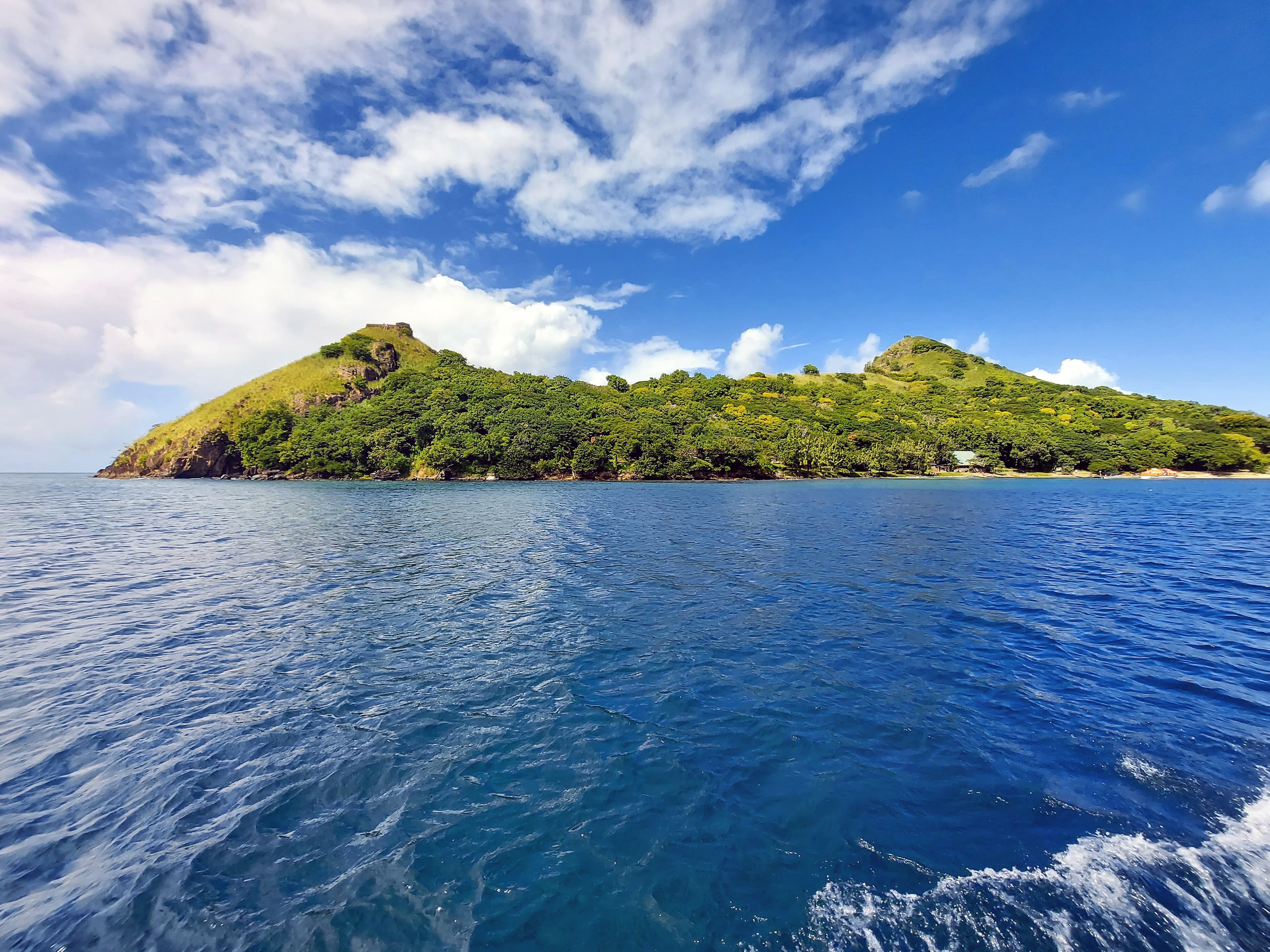
Pigeon Island National Landmark
A former island, now connected to the mainland by a causeway, with 18th-century British fort ruins, hiking trails and beaches near Rodney Bay.
Tet Paul Nature Trail
A short, steep community-run trail above Soufrière with some of the best panoramic Piton views on the island, plus local history and plant life along the way.
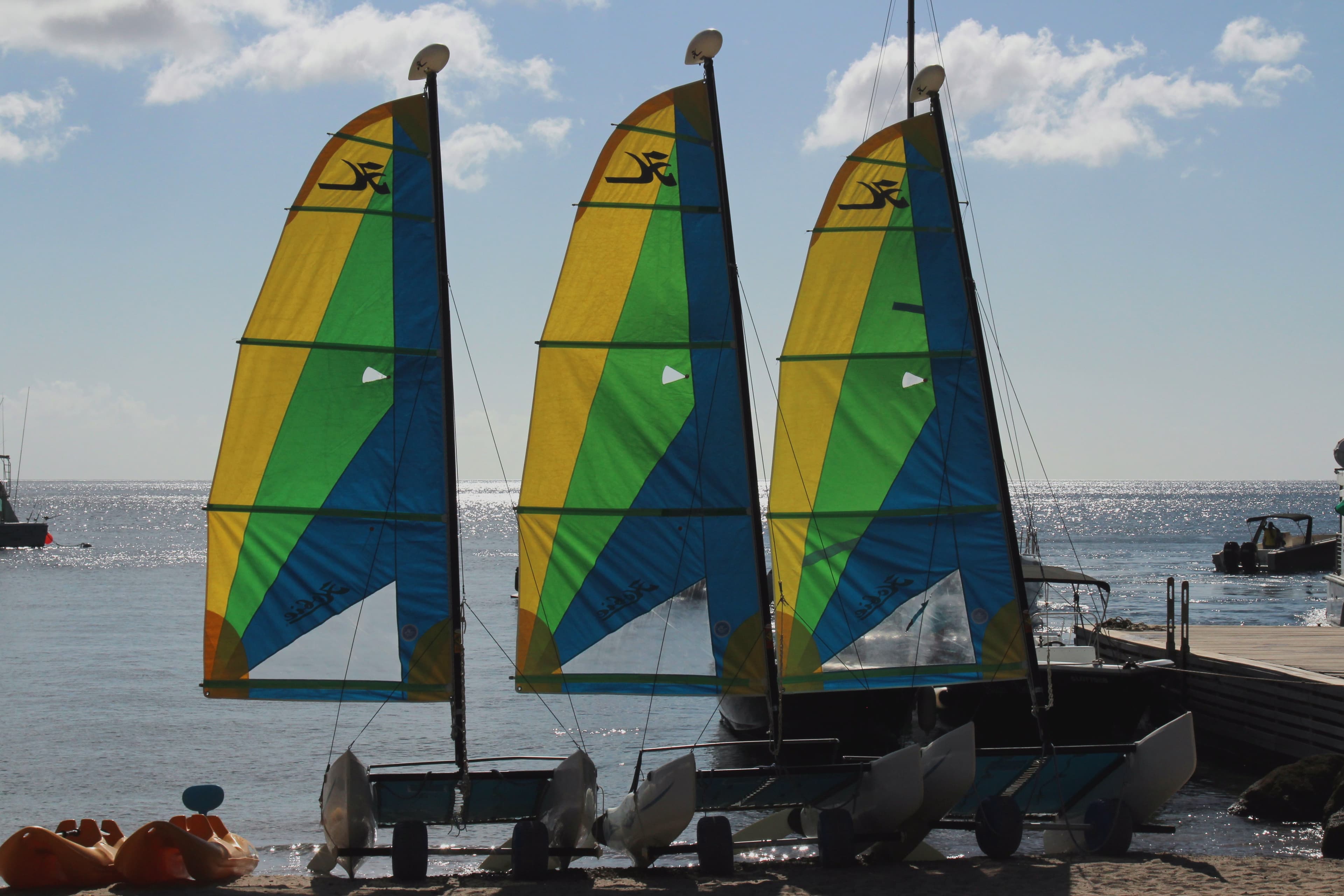
Sugar Beach
A white-sand beach nestled directly between Gros Piton and Petit Piton, among the most photographed spots in the Caribbean.
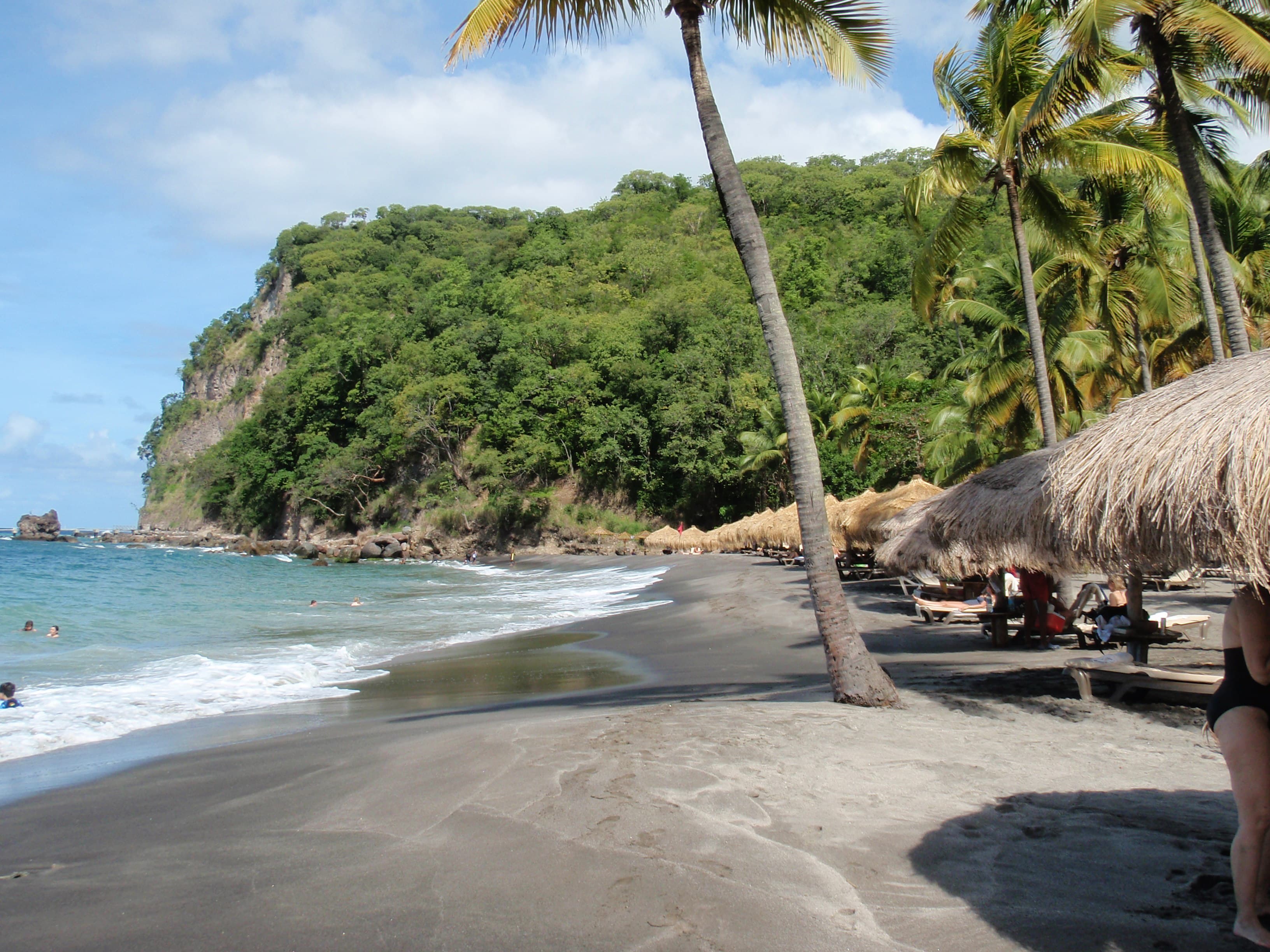
Anse Chastanet, Anse Mamin & Anse Cochon
A trio of beaches near Soufrière backed by rainforest and reef, popular for snorkelling and diving right off the sand.
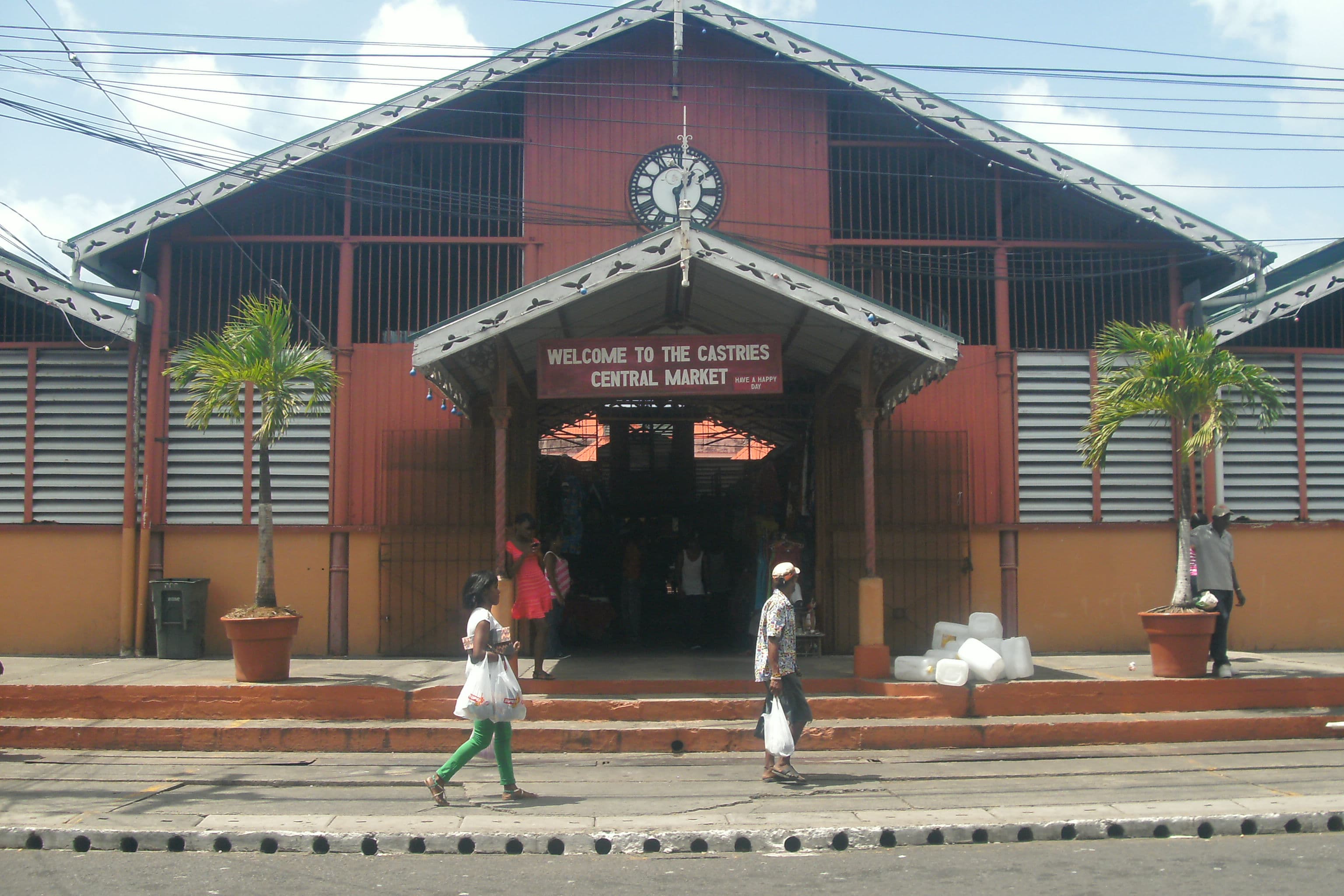
Castries Central Market
The capital's market, with a produce floor downstairs and a local-food floor upstairs serving stewed chicken, fish and other everyday Saint Lucian lunches.
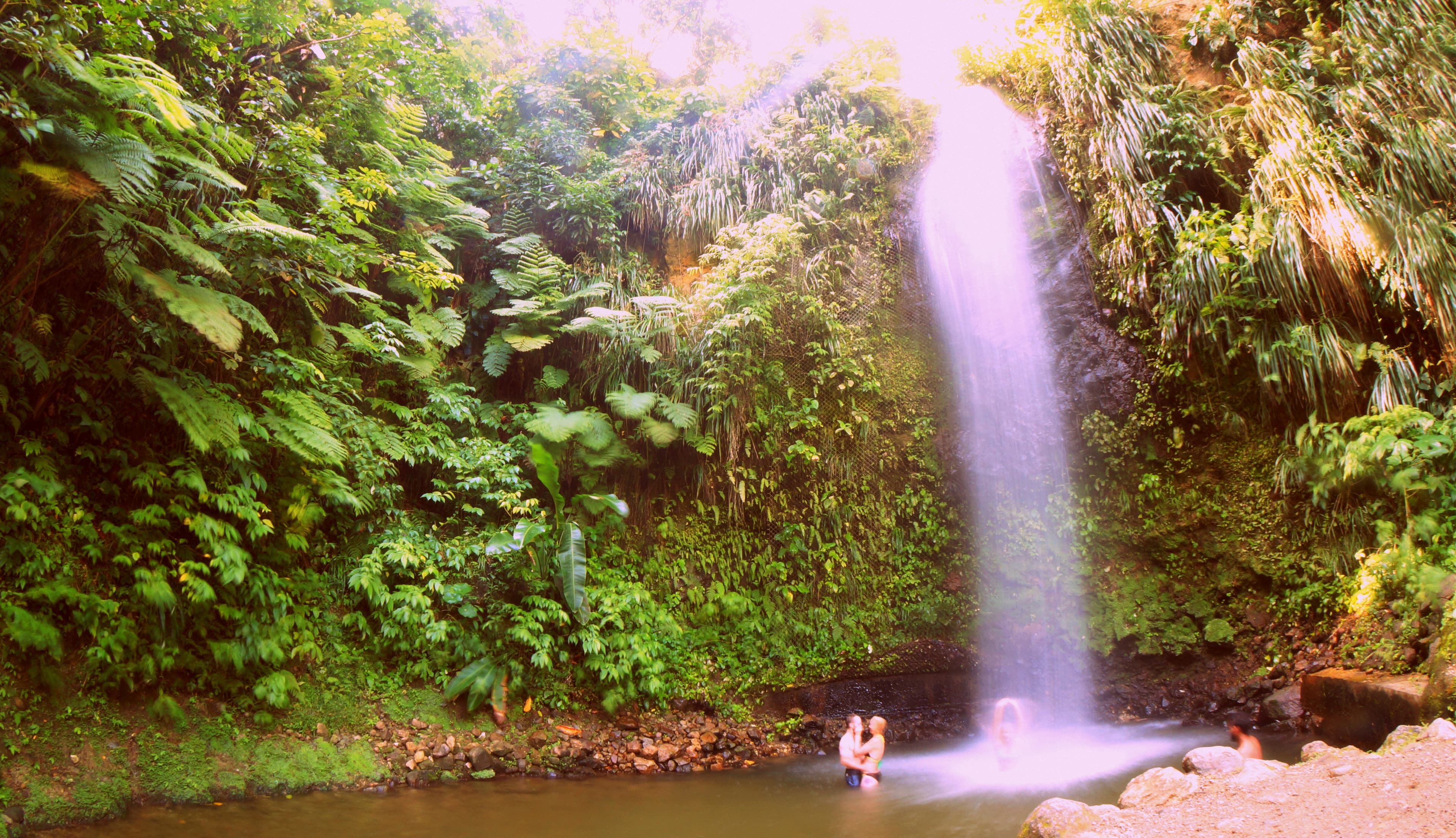
Toraille Waterfall
An easily reached waterfall near Soufrière set in a garden, with a plunge pool for swimming.
Experiences to have
Gros Piton hike
A demanding but non-technical climb (roughly 3 hours up) with a certified local guide, required by park rules, up the taller of the two Pitons.
Gros Islet Friday night street party
A weekly open-air street party in the fishing village of Gros Islet: food stalls, sound systems and dancing that draws locals and visitors alike.
Saint Lucia Carnival
The island's carnival, held in July with soca, costume bands and parades through Castries. Moved off the traditional pre-Lenten calendar decades ago.
Diving and snorkelling Anse Chastanet reef
A reef starting just off the beach, with drop-offs further out: one of the more accessible reef-diving spots in the Eastern Caribbean.
Saint Lucia Jazz & Arts Festival
An annual music festival, usually held around May, that has drawn major international jazz and R&B acts to venues across the island for decades.
Sailing or a catamaran trip to the Pitons
A popular way to see the Pitons and Soufrière coastline from the water, often combined with snorkelling stops.
Rainforest Adventures aerial tram and zipline
A canopy tour above the rainforest near Chassin/Babonneau in the island's northeast, combining an open-air aerial tram, ziplines and nature trails.
Local dishes to try
Green fig and saltfish
Saint Lucia's national dish: boiled unripe green bananas ("green figs") with salted, flaked codfish, onions, peppers and local seasoning. Rooted in 19th-century provisions of cheap bananas and imported salt cod.
Bouyon
A hearty one-pot soup of root vegetables, dumplings and meat (often pig tail, salted beef or chicken), similar to dishes found across the French Creole Caribbean.
Accra (saltfish fritters)
Deep-fried saltfish fritters, a common street-food and breakfast snack.
Lambi (conch)
Conch meat, curried, stewed or grilled, popular along the coast.
Best places to eat
Castries Central Market (upstairs food stalls)Castries
Budget local lunches (stewed chicken or fish with rice), cooked fresh and often sold out by early afternoon.
Flavours of the GrillGros Islet
Local seafood and meat grilled to order, including shrimp in coconut curry, curried goat and green fig pie.
Jacques Waterfront DiningRodney Bay
Caribbean flavours with a French twist, on the water in Rodney Bay.
Pink Plantation HouseCastries (Morne Fortune)
French and Creole fusion in a restored plantation house overlooking Castries, known for lamb rack and grilled catch of the day.
Spinnakers Beach Bar & CarveryReduit Beach, Rodney Bay
A relaxed beach bar with local and seafood dishes and views toward Pigeon Island.
Anthem, motto and pledge
National motto
“The Land, The People, The Light”
National anthem
“Sons and Daughters of Saint Lucia”, words by Rev. Charles Jesse, music by Leton Felix Thomas. Adopted 1967, at self-government; reconfirmed as the national anthem at independence in 1979. A Kwéyòl-language version was approved in 2016.
Listen / read more →National pledge
With God as my guide, I pledge allegiance to my country, Saint Lucia. I proclaim that I will serve my country with pride and dignity and will defend it with vigour and valour in the pursuit of excellence, justice and equality for all.
Source: Government of Saint Lucia (govt.lc)
Saint Lucia: frequently asked questions
How do I move to Saint Lucia as a CARICOM national?
The CARICOM Skills Certificate (CSME) is the main route to live and work in Saint Lucia without a work permit. See the CSME steps for Saint Lucia for the full application process.
Do all CARICOM nationals need the certificate, or is there full free movement?
No. Four CARICOM countries have gone further than the standard CSME certificate and implemented full free movement between themselves: Barbados, Belize, Dominica, St. Vincent and the Grenadines. Nationals of those four can work in each other's countries without a certificate. Everyone else, including anyone moving to or from Saint Lucia, still applies for the CSME Skills Certificate.
How much does it cost to visit Saint Lucia?
Saint Lucia is moderate to high cost by Caribbean standards, especially in prime tourist areas like Rodney Bay, Soufrière and Cap Estate. A budget traveller can expect roughly US$100–150/day (guesthouse or budget hotel, local food, public transport, few tours); mid-range roughly US$200–350/day (a comfortable hotel or Airbnb, a mix of local and nicer restaurants, several tours); luxury US$500+/day (upscale resort or boutique hotel, fine dining, private tours). For a longer stay, see the cost-of-living section above for typical monthly rent.
What is the currency and do I need cash?
The currency is the Eastern Caribbean dollar (XCD), fixed at EC$2.70 to US$1. US dollars are widely accepted in tourist areas, though change may come back in XCD. Major cards work in most hotels, restaurants and larger shops, but smaller vendors, markets and rural spots often prefer cash. ATMs are available in Castries, Rodney Bay, Vieux Fort and a few other towns.
Do I need a visa to visit as a tourist?
Many nationalities, including the US, UK, Canada, the EU and CARICOM, can enter visa-free for short stays, often up to 42–90 days, with a valid passport and proof of onward travel. Always confirm current rules with the Saint Lucia Immigration Department or your nearest embassy before travelling.
How do I get around the island?
Inexpensive local buses connect Castries with most parishes, though schedules can be informal. Taxis are readily available at the airport, cruise port and major hotels; agree the fare in advance. Rental cars are available at the airport and in Castries; driving is on the left, and roads are generally good but narrow, steep and winding in the interior. Water taxis and boats are used for some beach hops and trips along the west coast, often arranged by hotels or tour operators.
What are the must-do experiences in Saint Lucia?
Sail or take a catamaran trip past the Pitons, soak in the Sulphur Springs mud baths near Soufrière (the "drive-in volcano"), hike Gros Piton with a guide for a challenging trek and panoramic views, visit Diamond Falls Botanical Gardens and its waterfalls, relax on Reduit Beach in Rodney Bay or Sugar Beach between the Pitons, and explore Castries market, cathedral and the viewpoints over the harbour.
What local food should I try?
Green fig and saltfish is the national dish: boiled unripe green bananas with flaked salted cod. Also look for bouyon (a hearty one-pot stew of meat or fish with dasheen, pumpkin, carrots and spices), roti, rice and peas with stewed chicken or fish and provision, and fresh grilled fish, lobster in season and conch. Try the market eateries and small restaurants in Castries, local cook-shops in Soufrière and other towns, and beachfront venues in Rodney Bay and around the Pitons.
Is Saint Lucia safe for tourists?
Saint Lucia is generally considered moderately safe for tourists, with most visits trouble-free. Petty theft can occur, especially on beaches, in crowded areas or at night. Use normal precautions: don't leave valuables in cars or on the beach, avoid poorly lit areas at night, and secure belongings in your accommodation. Some areas outside the main tourist zones see more crime, so ask your hotel or tour operator about places to avoid, and check your government's current travel advisory before you go.
What is the best time to visit?
December to April is the dry, sunny, busiest and most expensive stretch. May–June and November are shoulder season: good weather, fewer crowds, better deals. July–October is rainier and more humid with higher hurricane risk, and prices are lowest. For hiking the Pitons, volcano visits and beach time with reliable weather, aim for December–April or May–June.
What should I pack?
Light, breathable clothing, swimwear, sandals and sturdy shoes for hiking the Pitons or waterfalls, plus sunscreen, a hat, sunglasses and insect repellent. A light rain jacket or poncho helps, especially in the wetter months. Bring something a little more modest if you'll visit a church or formal venue. For hiking Gros Piton, add lightweight long trousers, moisture-wicking shirts and a small daypack with water and snacks.
Any cultural tips I should know?
Saint Lucians are generally friendly and expressive; a polite greeting before asking a question is appreciated. Dress is casual but neat, with modest attire expected in churches and some villages. Tipping 10–15% in restaurants is standard if a service charge isn't already included, with small tips for taxi drivers and tour guides welcome. Many people speak Kwéyòl (French Creole) alongside English; a few basic Kwéyòl or French greetings are often welcomed but not required.
Thinking about moving to Saint Lucia?
Let us help you plan the next step. Get a personalised document plan, estimated timeline and practical next steps for your destination.
Last reviewed August 2026. Cost of living figures, rents, fees and office details change, and the figures here are drawn from the named sources on this page rather than being guaranteed prices. Confirm anything you are relying on before you act on it.