Moving to St. Vincent and the Grenadines
One volcanic mainland and 32 smaller islands and cays strung south to the Tobago Cays: one of the Caribbean's classic sailing grounds.
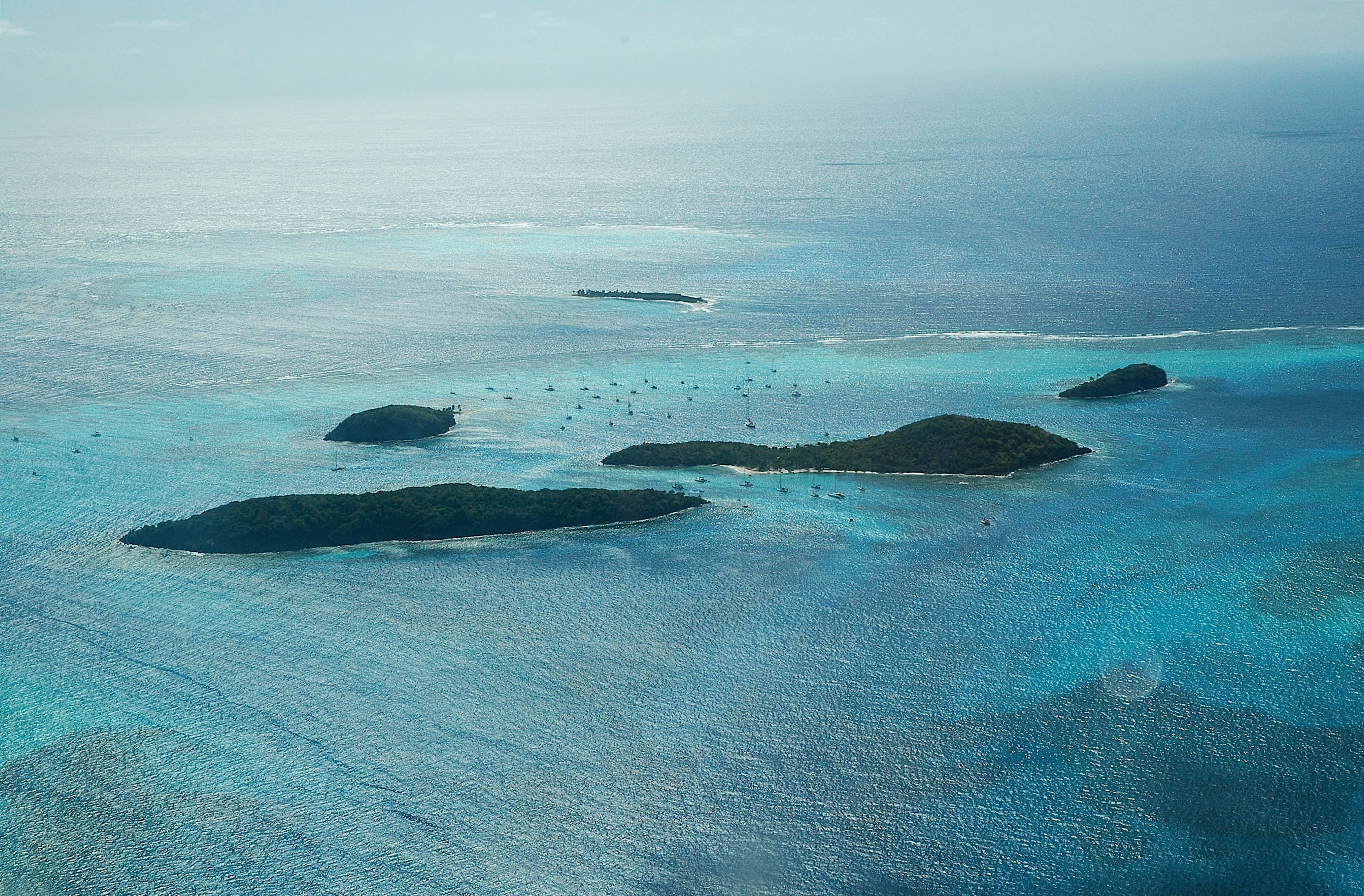
St. Vincent and the Grenadines is a multi-island nation: St. Vincent itself, mountainous and volcanic with the active La Soufrière at its northern end, plus a scattered chain of smaller Grenadine islands running south (Bequia, Mustique, Canouan, Union Island and dozens of smaller cays, including the Tobago Cays marine park). St. Vincent has most of the population and everyday life; the Grenadines are quieter, sail-in territory, ranging from Bequia's fishing-village character to Mustique's private-island exclusivity.
Capital
Kingstown, on St. Vincent
Population
≈99,200–100,650 (2024–2026 estimate)(CIA World Factbook (2024) / Worldometer (2025–2026))
Area
≈389 km² total: St. Vincent itself ≈344 km², plus ≈45 km² spread across 32 smaller Grenadine islands and cays (Bequia ≈18 km², Canouan ≈7.6 km², Mustique ≈5.7 km², and others)
Independence
27 October 1979, from the United Kingdom
Independence Day falls on 27 October each year. Next marked in 42 days, 47 years on.
Coordinates
13.16°N, 61.22°W(view on Google Maps)
Languages
English (official), Vincentian Creole English (widely spoken)
Currency
Eastern Caribbean dollar (XCD), fixed at EC$2.70 to US$1
Median age
≈34.7 years (Worldometer, 2026 estimate) to ≈38.1 years (CIA World Factbook, 2024 estimate), depending on source
Age structure
0–14 years: ≈18.8%. 15–64 years: ≈68.2%. 65 years and over: ≈13%.
Ethnic composition
African descent ≈71.2%, mixed ≈23%, Indigenous (Carib) ≈3%, European ≈1.5%, East Indian ≈1.1%, other ≈0.2%(2012 census)
Government
Parliamentary constitutional monarchy within the Commonwealth. King Charles III is head of state, represented locally by a Governor-General; a Prime Minister heads the government.
Where people live
Most people live on St. Vincent, concentrated in and around Kingstown. Bequia, a short ferry away, is the largest and most populous of the Grenadines; the rest of the chain (Mustique, Canouan, Union Island, Palm Island, Petit St. Vincent and many smaller uninhabited cays) has only a fraction of the country's population between them.
Cost of living
Rent, 1BR, ordinary local market
≈US$296/month outside Kingstown city centre (EC$800, Numbeo)
Rent, 1BR, marina / tourist areas
≈US$407/month in Kingstown city centre (EC$1,100, Numbeo); rentals on Bequia, Mustique or Canouan run well above this
Groceries, one person
≈US$250–475/month depending on source and how much is imported versus local produce
Utilities, small apartment
≈US$45–120/month for electricity alone without heavy AC use, ≈US$120–210+/month with regular AC, plus roughly US$7–20/month water and US$30–65/month internet
Inexpensive restaurant meal
≈US$6 (EC$15)
Mid-range dinner for two
≈US$61 (EC$165, 3-course), more in the Grenadines' resort restaurants
Modest monthly budget, single person
≈US$900–1,400/month all-in
Comfortable monthly budget, single person
≈US$1,400–2,800/month all-in on St. Vincent; noticeably more to live in or near the Grenadines' resort islands
Numbeo's bundled "basic utilities" figure (EC$200 ≈ US$74/month total for electricity, water and garbage) undercounts electricity: VINLEC, the local utility, adds a fuel surcharge on top of its base rate that has run as high as EC$0.83/kWh on its own in 2026 as fuel costs rose, so real electricity bills swing with the surcharge month to month. The higher, unbundled figures above are more realistic. St. Vincent itself is the affordable option; Bequia is pricier, and Mustique, Canouan and the smaller private-island Grenadines are a different, much higher price tier built around tourism and second homes.
Sources: Numbeo and livingcost.org, as of August 2026. Cost-of-living figures are estimates that shift with the season and the neighbourhood; treat them as a starting point, not a quote.
Moving to St. Vincent and the Grenadines
Visas, healthcare, taxes and where people settle, for anyone actually planning the move.
Visa and work permit
St. Vincent and the Grenadines is one of the four CARICOM countries with full free movement: nationals of St. Vincent and the Grenadines, Barbados, Belize and Dominica can settle and work in each other's countries without any extra application. It's also one of six OECS member states with a separate, overlapping free-movement arrangement (Antigua and Barbuda, Dominica, Grenada, St. Kitts and Nevis, Saint Lucia and St. Vincent and the Grenadines), so citizens of Antigua and Barbuda, Grenada, St. Kitts and Nevis and Saint Lucia can also live and work here without a permit. Other CARICOM nationals still go through the CSME Skills Certificate; see the CSME steps for St. Vincent and the Grenadines for that process. Most other visitors get a month visa-free, extendable, while CARICOM nationals and British passport holders commonly get 6 months. Anyone staying longer than a year, or working outside the free-movement groups above, applies for a temporary residence permit through the Office of the Prime Minister, showing either financial means or a local job.
Permanent residency
There's no fixed-price citizenship or residence-by-investment scheme here like some neighbouring islands run; longer stays go through the temporary residence process above. The government instead promotes business investment through Invest SVG, which offers import duty exemptions and tax holidays for priority sectors.
Healthcare
Milton Cato Memorial Hospital in Kingstown is the main public hospital, with a new, World Bank-funded facility under construction in Arnos Vale. Complex cases are often referred to Queen Elizabeth Hospital in Barbados, roughly a two-hour flight away, or to Trinidad. International private health insurance, typically US$200-600/month for a healthy adult including medical evacuation, is standard for movers.
Taxes
Following a 2025 reform, income above an annual exemption of XCD 25,000 is taxed progressively: 10% on the first band to XCD 5,000, 20% up to XCD 10,000, and 30% above that. Residents are taxed only on income actually received in St. Vincent and the Grenadines, and there's no capital gains, inheritance, gift or offshore-dividend withholding tax. VAT runs 16% generally, 10% for hospitality.
Where people settle
Kingstown and its outskirts (Villa, Indian Bay, Arnos Vale, Calliaqua)
The capital's more residential surrounding neighbourhoods, the most popular base for movers. Two-bedroom apartments run roughly US$800-2,000/month.
The leeward (west) coast of the mainland
Quieter and more rural, popular with retirees and remote workers. Rentals run roughly US$600-1,500/month.
Bequia
The second-largest island, a short ferry ride from Kingstown, with the territory's most established outside community and its own international school. Villa rentals run roughly US$1,500-3,500/month.
Canouan
A high-end development with its own international airport and a Mandarin Oriental resort, aimed at the top of the market.
Union Island
A more basic, budget-friendly alternative among the Grenadines. Rentals run roughly US$800-2,000/month.
Sources: Expat.com, as of August 2026. Visa, residency and tax rules change: confirm current requirements with the relevant government agency before acting on them.
We can handle this for you
Visa or CSME paperwork, banking, housing, flights and everything else needed for a successful move to St. Vincent and the Grenadines: this is exactly what we do every day. Reach out and we’ll walk you through every step.
Places to see
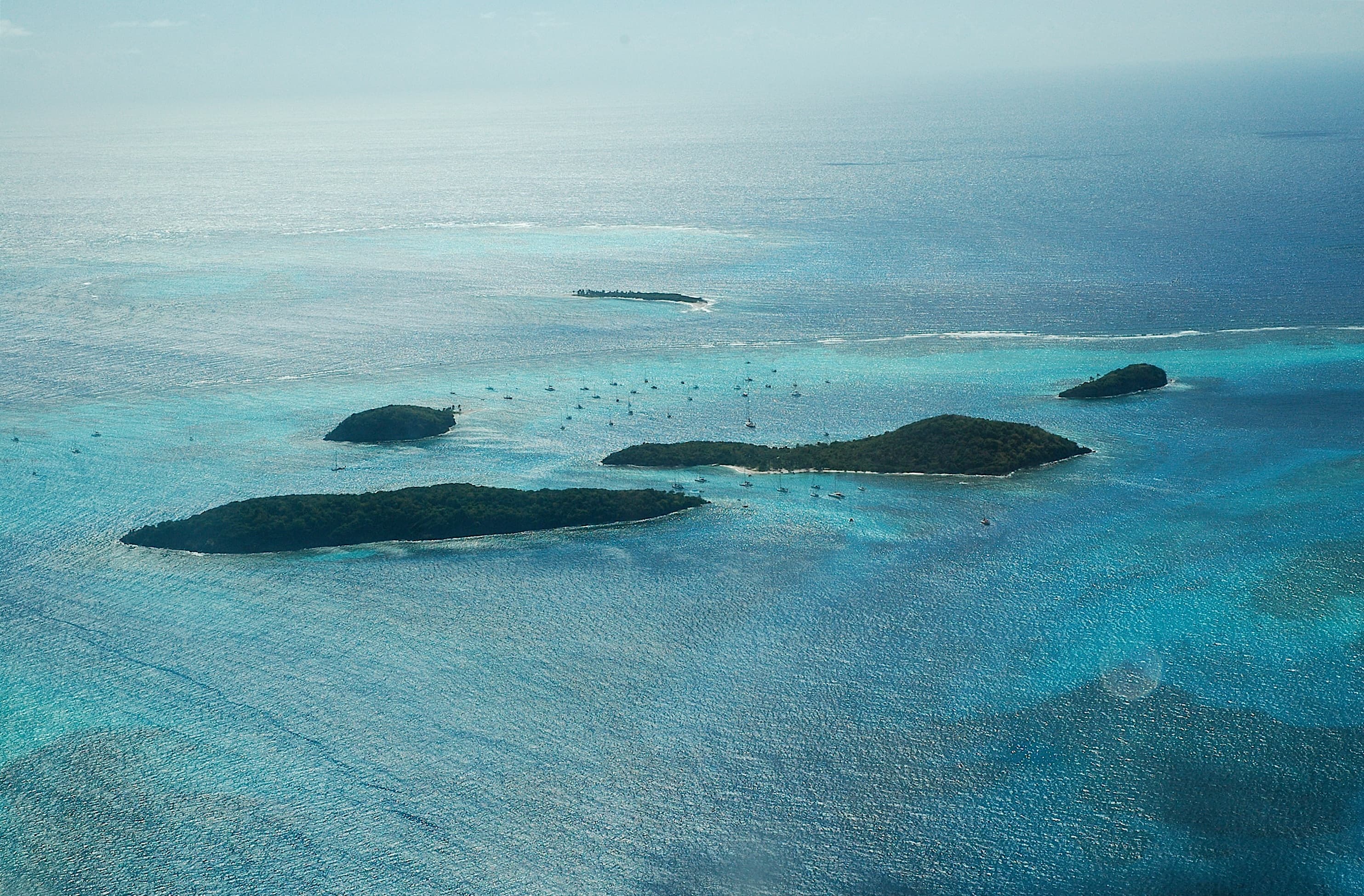
Tobago Cays Marine Park
A cluster of small, uninhabited islands and cays ringed by a horseshoe reef, protected as a marine park and one of the Caribbean's best-known sailing and snorkelling anchorages. Turtles are a regular sight in the shallows.
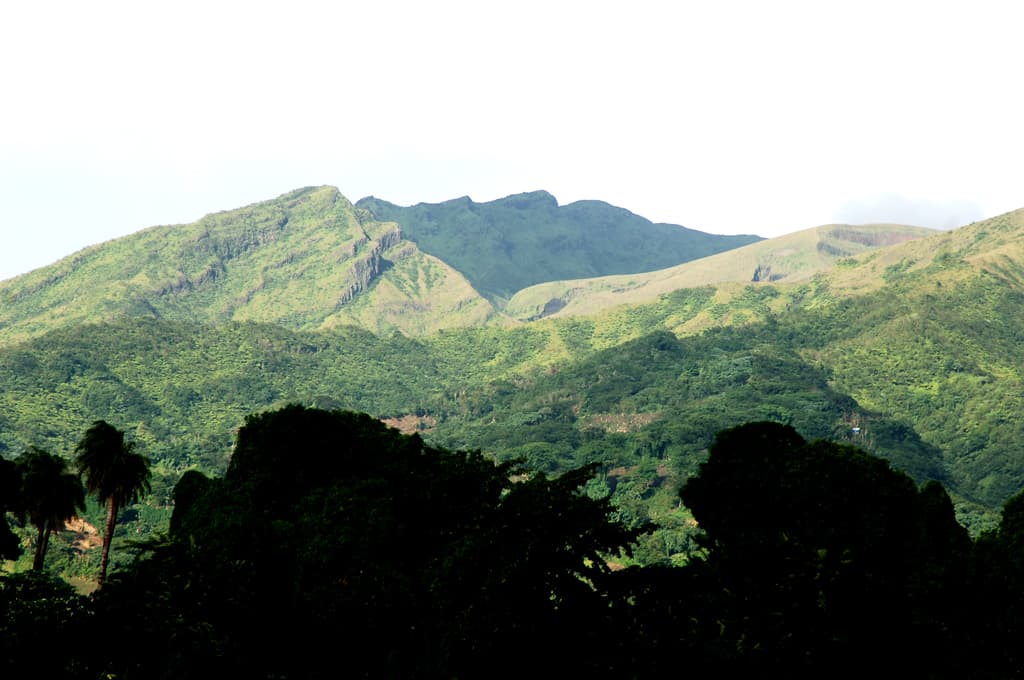
La Soufrière
St. Vincent's active volcano at the island's northern end, last erupting explosively in April 2021. A demanding hiking trail leads to the crater rim when conditions allow.
St. Vincent Botanic Gardens
Established in 1765, the oldest botanical garden in the Western Hemisphere, in Kingstown. Home to a breadfruit tree descended from Captain Bligh's original 1793 shipment from Tahiti.
Falls of Baleine
A waterfall on St. Vincent's remote northern coast, reachable only by boat, tumbling into a rocky pool a short walk from the beach landing.
Dark View Falls
Twin waterfalls with natural swimming pools, reached by a short trail and a bamboo bridge inside La Soufrière National Park.
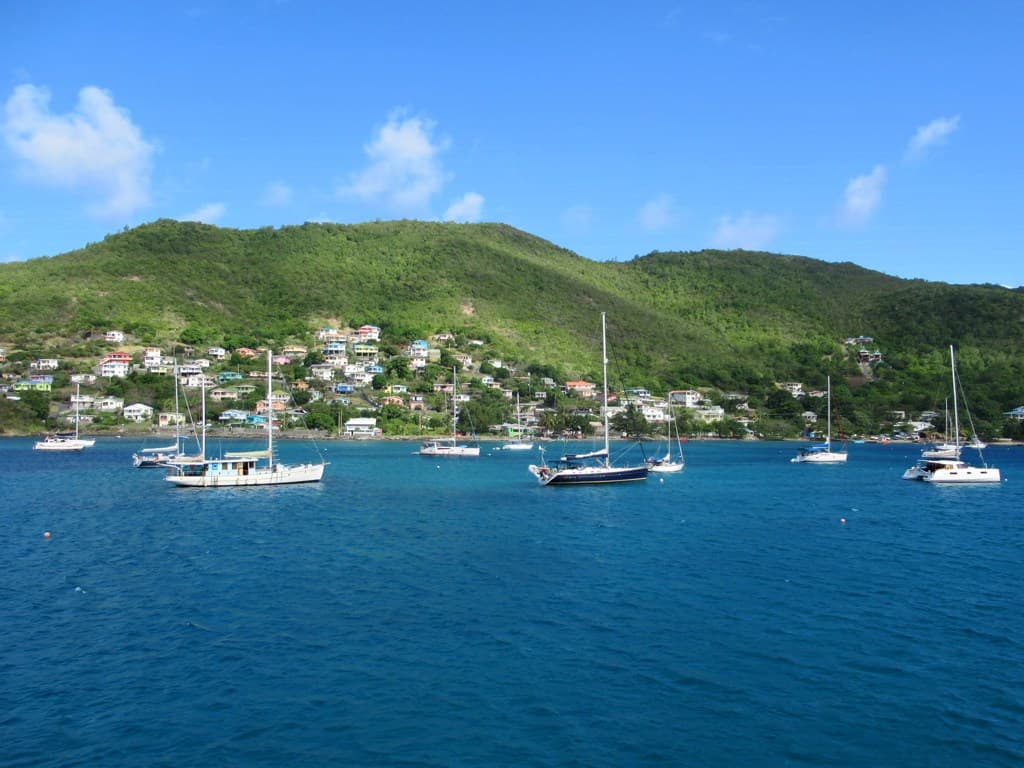
Bequia
The largest of the Grenadines and a short ferry from St. Vincent, built around Port Elizabeth and Admiralty Bay: traditional boatbuilding, a whaling history, and a laid-back sailing-town feel.
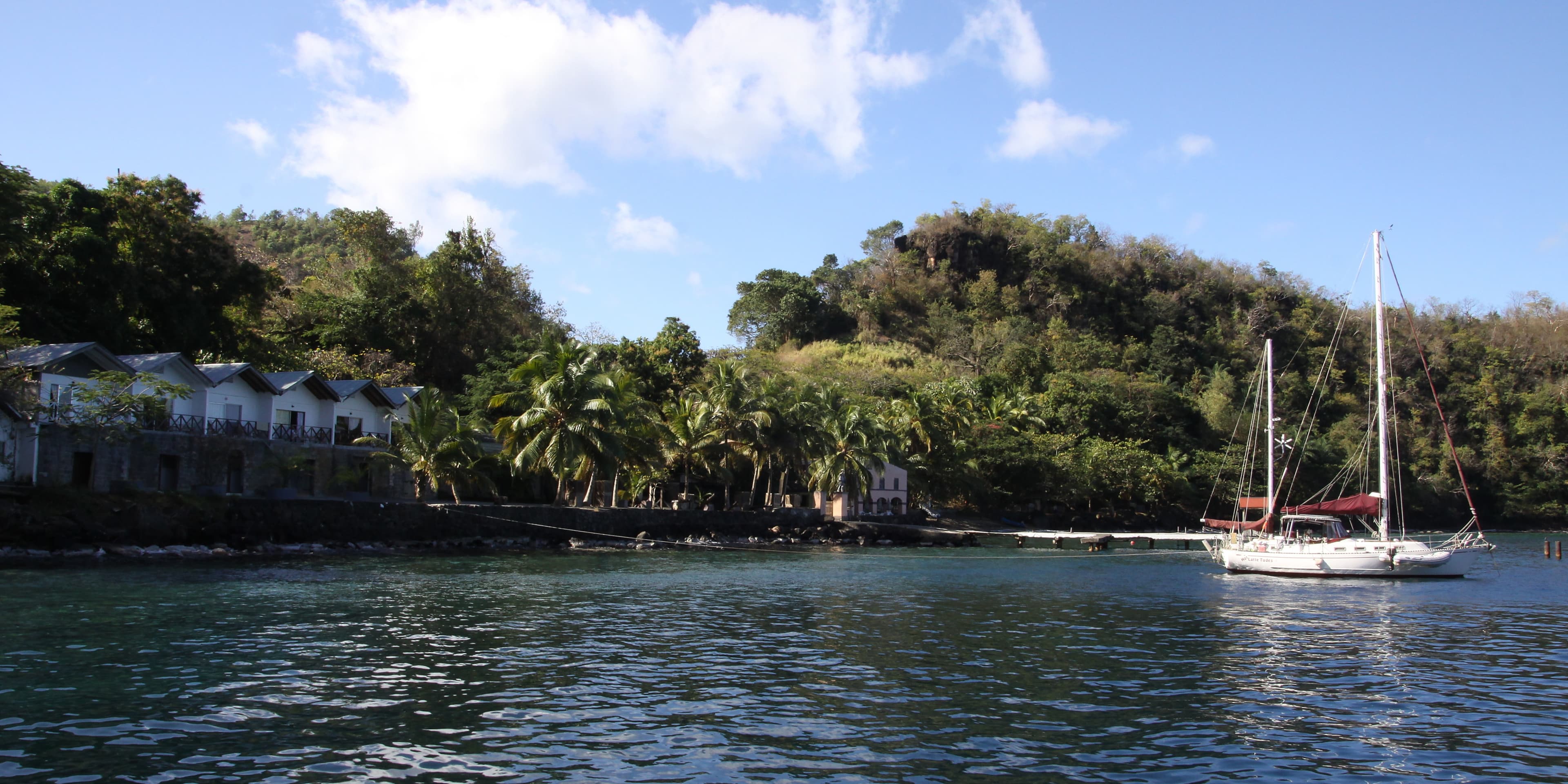
Wallilabou Bay
A quiet bay on St. Vincent's west coast used as a filming location for Pirates of the Caribbean, with some of the set dressing still standing.
Owia Salt Pond
A natural tidal swimming pool cut into volcanic rock on St. Vincent's northeastern coast, protected from the Atlantic swell by a rock barrier.
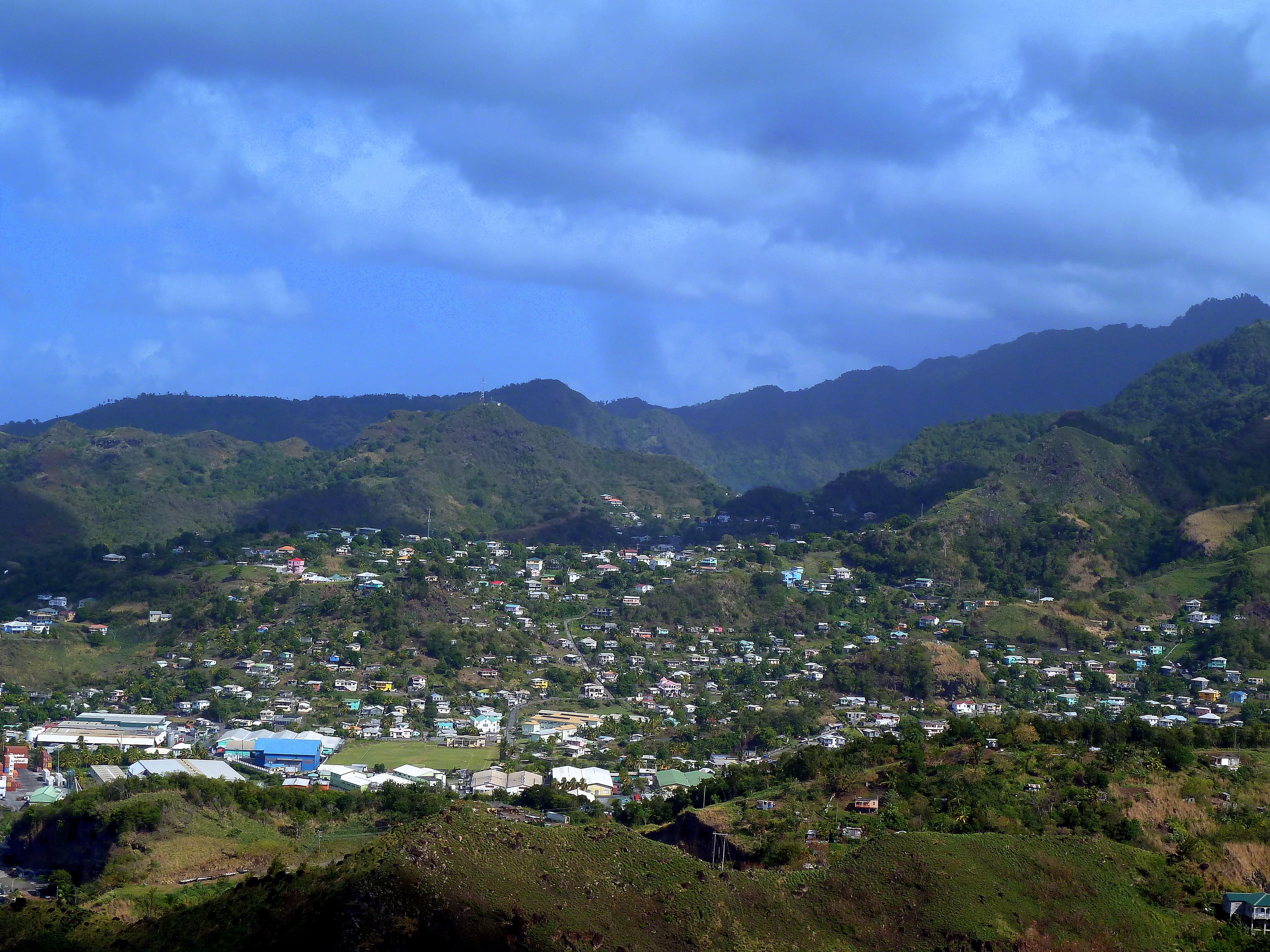
Fort Charlotte
An 18th-century hilltop fort overlooking Kingstown and its harbour, with old cannons and wide coastal views.
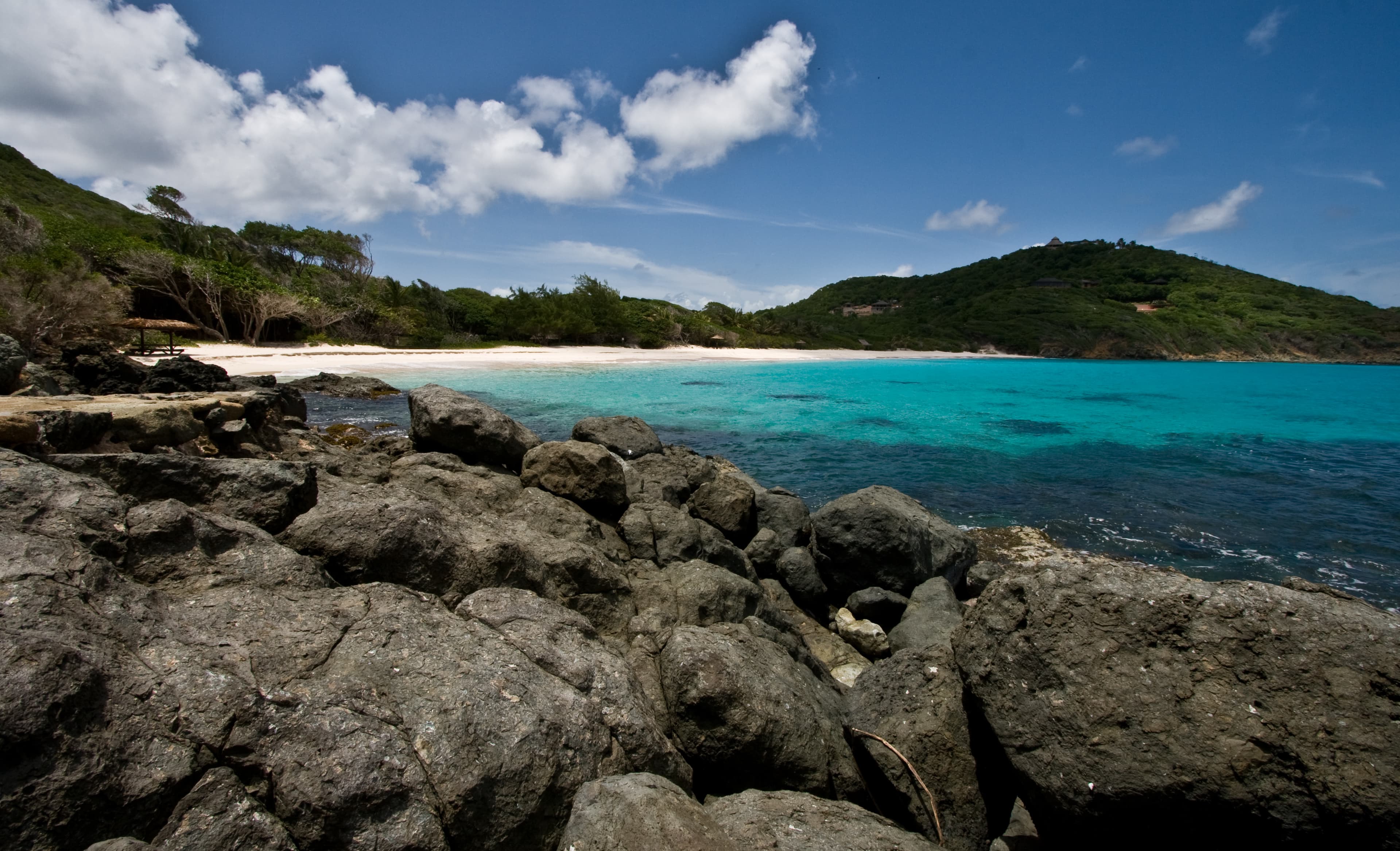
Mustique
A small private island in the Grenadines known for celebrity homes and an exclusive resort. Day visits and boat trips are possible, though most of the island is private.
Experiences to have
Sailing the Grenadines
One of the Caribbean's classic sailing grounds: island-hopping by yacht or charter through Bequia, Mustique, Canouan, Union Island and the Tobago Cays.
Hiking La Soufrière
A challenging trail to the crater rim of St. Vincent's active volcano, best done with a local guide and only when conditions permit.
Diving and snorkelling the Tobago Cays
Clear, shallow water around the Cays with sea turtles, reef fish and coral, accessible by day trip or as part of a sailing charter.
Bequia Easter Regatta
A multi-day sailing regatta and festival held over the Easter weekend, drawing yachts and visitors from across the region.
Birdwatching for the St. Vincent parrot on the Vermont Nature Trail
A rainforest loop trail through Grand Bonhomme Mountain in the island's interior, one of the best places to spot the St. Vincent parrot (Amazona guildingii), the endemic national bird. Dawn and dusk are prime times.
Vincy Mas
St. Vincent and the Grenadines' carnival, held in late June/early July with soca, costume bands (mas) and parades through Kingstown.
Local dishes to try
Roasted breadfruit and fried jackfish
The national dish: breadfruit roasted over charcoal or wood until soft, served with pan-fried, well-seasoned jackfish (a small local fish). Breadfruit itself arrived on St. Vincent via Captain Bligh in 1793.
Callaloo soup
A soup built on callaloo (dasheen leaf), common across the Eastern Caribbean and a staple of Vincentian cooking.
Bouyon
A hearty one-pot stew of meat or fish with ground provisions and vegetables, also common across the French Creole-influenced Eastern Caribbean.
Roti
Flatbread wrapped around curried chicken, goat or vegetables, reflecting Indo-Caribbean influence.
Ground provisions
Root vegetables (dasheen, sweet potato, yam, breadfruit) typically served alongside stewed or fried fish and meat.
Best places to eat
Vee Jay's Restaurant & BarKingstown
A Kingstown institution serving traditional Vincy lunchtime fare: mutton or fish stew, curried goat, roti.
Basil's Bar (Cobblestone Inn)Kingstown
Local Caribbean dishes with international touches, in the historic Cobblestone Inn building.
Flow Wine Bar and KitchenKingstown
Fresh fish and pasta in a more upscale setting, with live music on some nights.
Jack's Beach BarPrincess Margaret Beach, Bequia
A beachfront bar and grill on Bequia: grilled fish burgers, jerk pork and plantain, and cocktails on the sand.
Firefly Bequia PlantationBequia
Dining at a small plantation-turned-guesthouse on Bequia, with garden and hillside views over Admiralty Bay.
Anthem, motto and pledge
National motto
“Pax et Justitia (Latin: "Peace and Justice")”
National anthem
“Saint Vincent, Land So Beautiful”, words by Phyllis Joyce McClean Punnett, music by Joel Bertram Miguel. Adopted 1979, at independence (written and first performed in 1967).
Listen / read more →National pledge
Land of my birth I pledge to thee, my loyalty and devotion, in all I think or say or do.
Source: Government of St. Vincent and the Grenadines, Ministry of Foreign Affairs (foreign.gov.vc)
St. Vincent and the Grenadines: frequently asked questions
How do I move to St. Vincent and the Grenadines as a CARICOM national?
The CARICOM Skills Certificate (CSME) is the main route to live and work in St. Vincent and the Grenadines without a work permit. See the CSME steps for St. Vincent and the Grenadines for the full application process.
Do all CARICOM nationals need the certificate, or is there full free movement?
St. Vincent and the Grenadines is one of four CARICOM countries with full free movement between themselves: Barbados, Belize, Dominica, St. Vincent and the Grenadines. Nationals of those four can live and work in St. Vincent and the Grenadines without a CSME Skills Certificate. Everyone else moving to St. Vincent and the Grenadines still needs the certificate.
How much does it cost to visit St. Vincent and the Grenadines?
SVG is moderate cost by Caribbean standards. St. Vincent itself is relatively affordable, while the Grenadines (Bequia, Canouan, Union Island and others) range from mid-range to very high-end. A budget traveller can expect roughly US$80–130/day (guesthouse or budget hotel, local food, public transport, few tours); mid-range roughly US$180–300/day (a comfortable hotel or Airbnb, a mix of local and nicer restaurants, several tours); luxury US$500+/day (a high-end resort or private villa in the Grenadines, fine dining, private boat charters). For a longer stay, see the cost-of-living section above for typical monthly rent.
What is the currency and do I need cash?
The currency is the Eastern Caribbean dollar (XCD), fixed at EC$2.70 to US$1. US dollars are widely accepted in tourist areas, though change may come back in XCD. Major cards work in many hotels, restaurants and larger shops on St. Vincent and in the busier Grenadines, but smaller vendors and rural spots often prefer cash. ATMs are available in Kingstown and a few other towns on St. Vincent, but limited or nonexistent on some of the smaller Grenadines.
Do I need a visa to visit as a tourist?
Many nationalities, including the US, UK, Canada, the EU and CARICOM, can enter visa-free for short stays, often up to 30–90 days, with a valid passport and proof of onward travel. Always confirm current rules with the SVG Immigration Department or your nearest embassy before travelling.
How do I get around the islands?
Inexpensive local buses connect Kingstown with many villages and key sites on St. Vincent, though schedules can be informal. Taxis are readily available at the airport, cruise port and major hotels; agree the fare in advance. Rental cars are available at the airport and in Kingstown; driving is on the left, and St. Vincent's roads are generally good but narrow and hilly. Ferries and boats handle island-hopping around the Grenadines (Bequia, Union Island, Canouan, the Tobago Cays and more); schedules vary, and private charters are common.
What are the must-do experiences in St. Vincent and the Grenadines?
Hike La Soufrière on St. Vincent, a strenuous cross-country trail to the crater; visit Dark View Falls, twin waterfalls with natural pools reached by a short adventurous walk; snorkel or sail the Tobago Cays Marine Park, a horseshoe-shaped reef with uninhabited cays and excellent marine life; explore Kingstown Botanic Gardens, one of the oldest in the Western Hemisphere; see Wallilabou Bay, a Pirates of the Caribbean filming location; and island-hop the Grenadines, from Bequia to Union Island and Canouan, for very different beach and resort experiences.
What local food should I try?
Roasted breadfruit and fried jackfish is the national dish: breadfruit roasted over charcoal or wood, served with pan-fried jackfish, a small local fish. Also look for callaloo soup, bouyon (a hearty one-pot stew of meat or fish with dasheen, pumpkin, carrots and spices), roti, and ground provisions (root vegetables) alongside stewed or fried fish and meat. Try the local cook-shops and market eateries in Kingstown, small restaurants elsewhere on St. Vincent, and waterfront venues in Bequia and Union Island.
Is St. Vincent and the Grenadines safe for tourists?
SVG is generally considered relatively safe for tourists, with most visits trouble-free. Petty theft can occur, especially on beaches or in crowded areas. Use normal precautions: don't leave valuables in cars or on the beach, avoid poorly lit areas at night, and secure belongings in your accommodation. Some areas outside the main tourist zones see more crime, so ask your hotel or tour operator about places to avoid, and check your government's current travel advisory before you go.
What is the best time to visit?
December to April is the dry, sunny, busiest and most expensive stretch. May–June and November are shoulder season: good weather, fewer crowds, better deals. July–October is rainier and more humid with higher hurricane risk, and prices are lowest. For hiking La Soufrière, snorkelling the Tobago Cays and beach time with reliable weather, aim for December–April or May–June.
What should I pack?
Light, breathable clothing, swimwear, sandals and sturdy shoes for volcano and waterfall hikes, plus sunscreen, a hat, sunglasses and insect repellent. A light rain jacket or poncho helps, especially in the wetter months. Bring something a little more modest if you'll visit a church or formal venue. For hiking La Soufrière, add lightweight long trousers, moisture-wicking shirts and a small daypack with water and snacks.
Any cultural tips I should know?
Vincentians are generally friendly and polite; a greeting before asking a question is appreciated. Dress is casual but neat, with modest attire expected in churches and some villages. Tipping 10–15% in restaurants is standard if a service charge isn't already included, with small tips for taxi drivers, boat captains and tour guides welcome. Life in the Grenadines runs slower and more relaxed than on the mainland, especially on the smaller islands, so build in patience for schedules.
See the exact CSME steps for St. Vincent and the Grenadines →
Thinking about moving to St. Vincent and the Grenadines?
Let us help you plan the next step. Get a personalised document plan, estimated timeline and practical next steps for your destination.
Last reviewed August 2026. Cost of living figures, rents, fees and office details change, and the figures here are drawn from the named sources on this page rather than being guaranteed prices. Confirm anything you are relying on before you act on it.