Moving to St. Kitts and Nevis
The smallest sovereign state in the Americas: two volcanic islands, a UNESCO fortress, and a carnival held at Christmas instead of summer.
St. Kitts and Nevis is the smallest sovereign country in the Americas, by both area and population: a federation of two volcanic islands separated by a narrow strait called The Narrows. St. Kitts is the larger, more developed island, home to Brimstone Hill Fortress and the capital, Basseterre; Nevis is quieter, greener and more residential, with its own hot springs and a constitutional right to secede from the federation if it ever chooses to.
Capital
Basseterre, on Saint Kitts
Population
≈47,000–53,000 (one of the smallest sovereign states in the world by population)(Worldometer / World Population Review)
Area
≈261–269 km² depending on source (Saint Kitts ≈176 km², Nevis ≈93 km²), the smallest sovereign state in the Americas by area
Independence
19 September 1983, from the United Kingdom
Independence Day falls on 19 September each year. Next marked in 4 days, 43 years on.
Coordinates
17.29°N, 62.73°W(view on Google Maps)
Languages
English (official)
Currency
Eastern Caribbean dollar (XCD), fixed at EC$2.70 to US$1
Median age
≈36.5 years
Age structure
0–14 years: ≈18–19%. 15–64 years: ≈68%. 65 years and over: ≈12–13%.
Ethnic composition
African descent ≈93%, mixed ≈3%, White ≈2%, East Indian ≈1.5%, other ≈0.6%(CIA World Factbook (2001 census, most recent available))
Government
Federation and parliamentary constitutional monarchy within the Commonwealth. King Charles III is head of state, represented locally by a Governor-General. Unusually for a federation, the constitution gives Nevis a specific path to secede from St. Kitts if it chooses to.
Where people live
Most people live on St. Kitts, concentrated around Basseterre. Nevis, reached by a short ferry, is smaller and more residential, centred on Charlestown.
Cost of living
Rent, 1BR, ordinary local market
≈US$600–900/month outside Basseterre or in a modest unit
Rent, 1BR, marina / tourist areas
≈US$900–1,800/month in Basseterre, Frigate Bay, South Friars, or on Nevis near Charlestown/Pinney's Beach
Groceries, one person
≈US$220–350/month, more if relying on imported goods
Utilities, small apartment
≈US$150–250/month for electricity alone (up to US$500+ with heavy AC use), plus roughly US$18–48 water and US$50–130 internet
Inexpensive restaurant meal
≈US$10–22
Mid-range dinner for two
≈US$90
Modest monthly budget, single person
≈US$1,700–2,500/month all-in
Comfortable monthly budget, single person
≈US$2,500–4,500/month all-in
Electricity here runs notably higher than almost anywhere else in the Caribbean: St. Kitts and Nevis reportedly pays around five times Trinidad and Tobago's rate and more than Antigua's, largely because of import-dependent power generation, so budget for it accordingly if you'll run air conditioning regularly. A premium lifestyle (Frigate Bay, South Friars or Nevis beachfront, frequent dining, high AC use) can run US$4,500–7,000+/month. A monthly public transport pass runs roughly US$80.
Sources: Global Citizen Solutions, Numbeo and other relocation guides, as of August 2026. Cost-of-living figures are estimates that shift with the season and the neighbourhood; treat them as a starting point, not a quote.
Moving to St. Kitts and Nevis
Visas, healthcare, taxes and where people settle, for anyone actually planning the move.
Visa and work permit
CARICOM nationals need the CSME Skills Certificate to live and work in St. Kitts and Nevis without a work permit; see the CSME steps for St. Kitts and Nevis for the process. St. Kitts and Nevis is also one of six OECS member states with full free movement among themselves (Antigua and Barbuda, Dominica, Grenada, St. Kitts and Nevis, Saint Lucia and St. Vincent and the Grenadines): citizens of those countries can settle here indefinitely and work without a permit at all. Visitors from more than 120 other countries can enter without a visa, though since May 2025 most arrivals also need an Electronic Travel Authorisation (eTA) beforehand, costing around US$17 for a single 90-day entry. Non-CARICOM nationals taking up a job still need a standard work permit tied to a local employer.
Permanent residency
St. Kitts and Nevis runs the Caribbean's oldest Citizenship by Investment programme, going back to 1984: a Sustainable Island State Contribution starting at US$250,000 for a family of up to four, or a real estate purchase from US$325,000 for a condo share up to US$600,000 for a single-family home, held for at least 7 years. Both routes now include a mandatory interview for the main applicant and any dependants aged 16 or older, and are typically decided within 4 to 6 months.
Healthcare
Joseph N. France General Hospital in Basseterre is the main public hospital on St. Kitts, with Alexandra Hospital serving Nevis. International health insurance with medical evacuation cover is strongly recommended, typically US$1,500-5,000 a year, since flying out a serious case to Barbados or the US can otherwise cost US$15,000-50,000 out of pocket.
Taxes
St. Kitts and Nevis has charged no personal income tax since 1980, on local or worldwide income, with no capital gains, inheritance or wealth tax either. VAT sits at 17%, temporarily reduced to 13% for part of 2025, and corporate tax runs 33% standard, dropping to 25% for manufacturing and 20% for tourism businesses.
Where people settle
Basseterre
The capital, home to roughly 15,500 people. One-bedroom rentals run roughly EC$1,350-2,700/month (US$500-1,000).
Frigate Bay
The island's best-known base for movers. Three-bedroom apartments run roughly EC$5,400-8,100/month, with villas well beyond that.
The Southeast Peninsula
A newer, upmarket strip aimed more at buyers than renters, with condos starting around US$400,000 to purchase.
Bird Rock and Fortlands
A mid-range residential option. Three-bedroom homes run roughly EC$4,050-6,750/month.
Charlestown (Nevis)
The sister island's main town, quieter and more local in feel. One-bedroom rentals run roughly EC$1,215-2,430/month.
Pinney's Beach (Nevis)
A beachfront stretch on Nevis, with oceanview villas from around EC$8,100/month.
Sources: Expat.com and St. Kitts and Nevis Citizenship by Investment Unit (official), as of August 2026. Visa, residency and tax rules change: confirm current requirements with the relevant government agency before acting on them.
We can handle this for you
Visa or CSME paperwork, banking, housing, flights and everything else needed for a successful move to St. Kitts and Nevis: this is exactly what we do every day. Reach out and we’ll walk you through every step.
Places to see
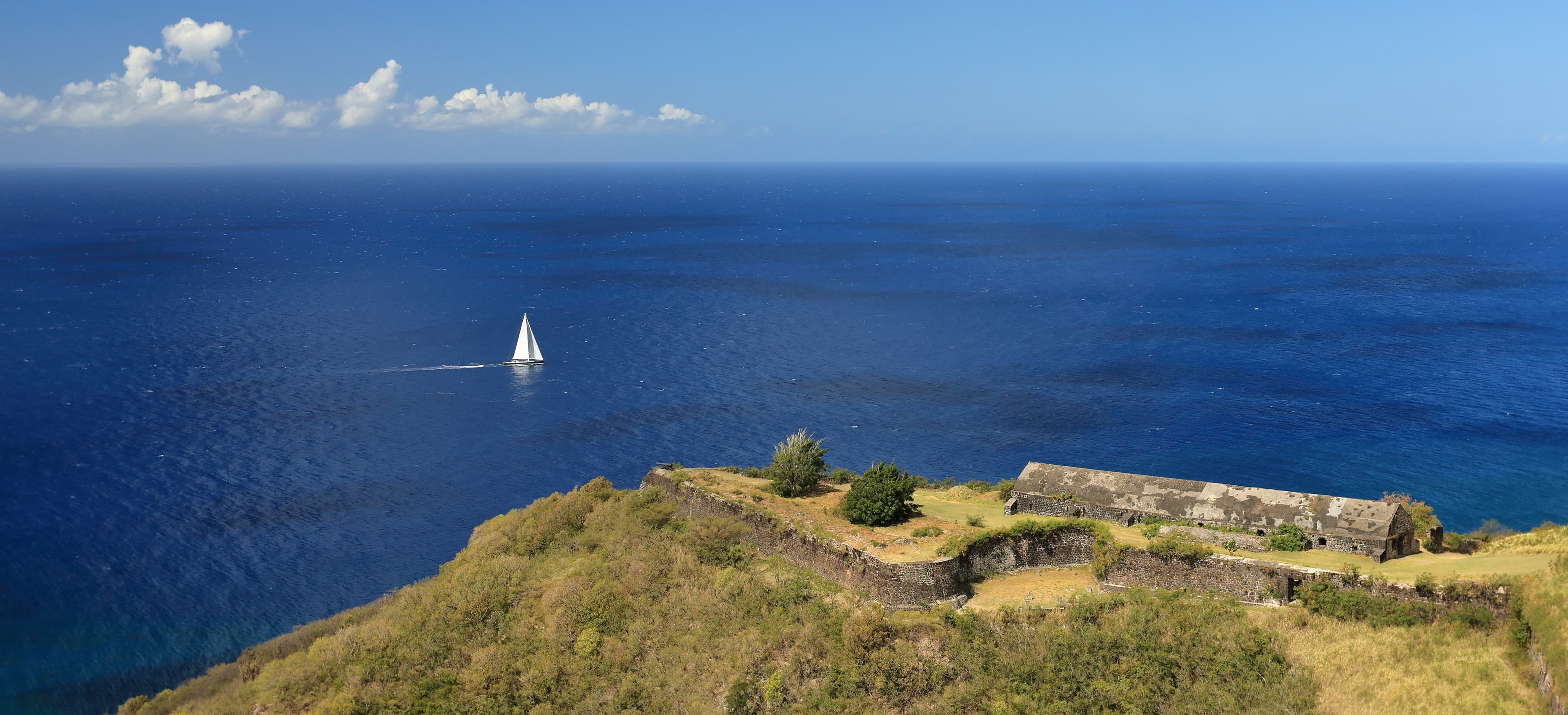
Brimstone Hill Fortress National Park
A UNESCO World Heritage Site (inscribed 1999): a hilltop fortress built by British engineers and enslaved African labour, finished in 1790, with sweeping views over the Caribbean Sea and neighbouring islands.
Photo: Martin Falbisoner, CC BY-SA 4.0, via Wikimedia Commons
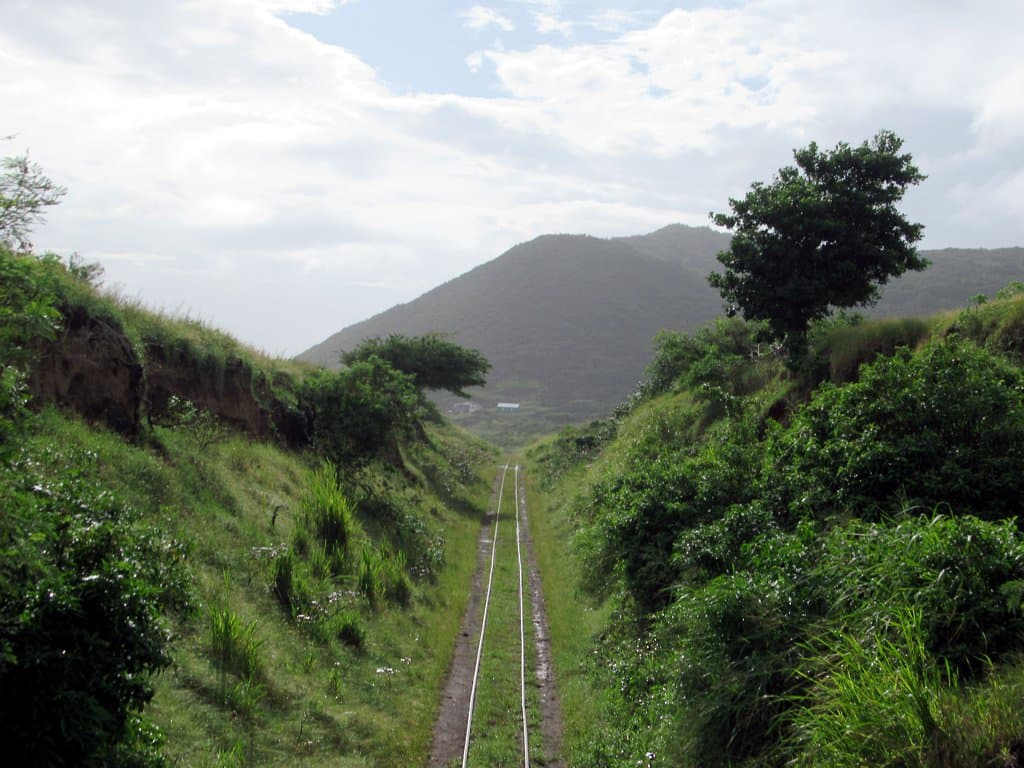
The St. Kitts Scenic Railway
A narrow-gauge railway built in 1912–1926 to move sugar cane, now a 30-mile tourist rail journey around the island's coastline and countryside.
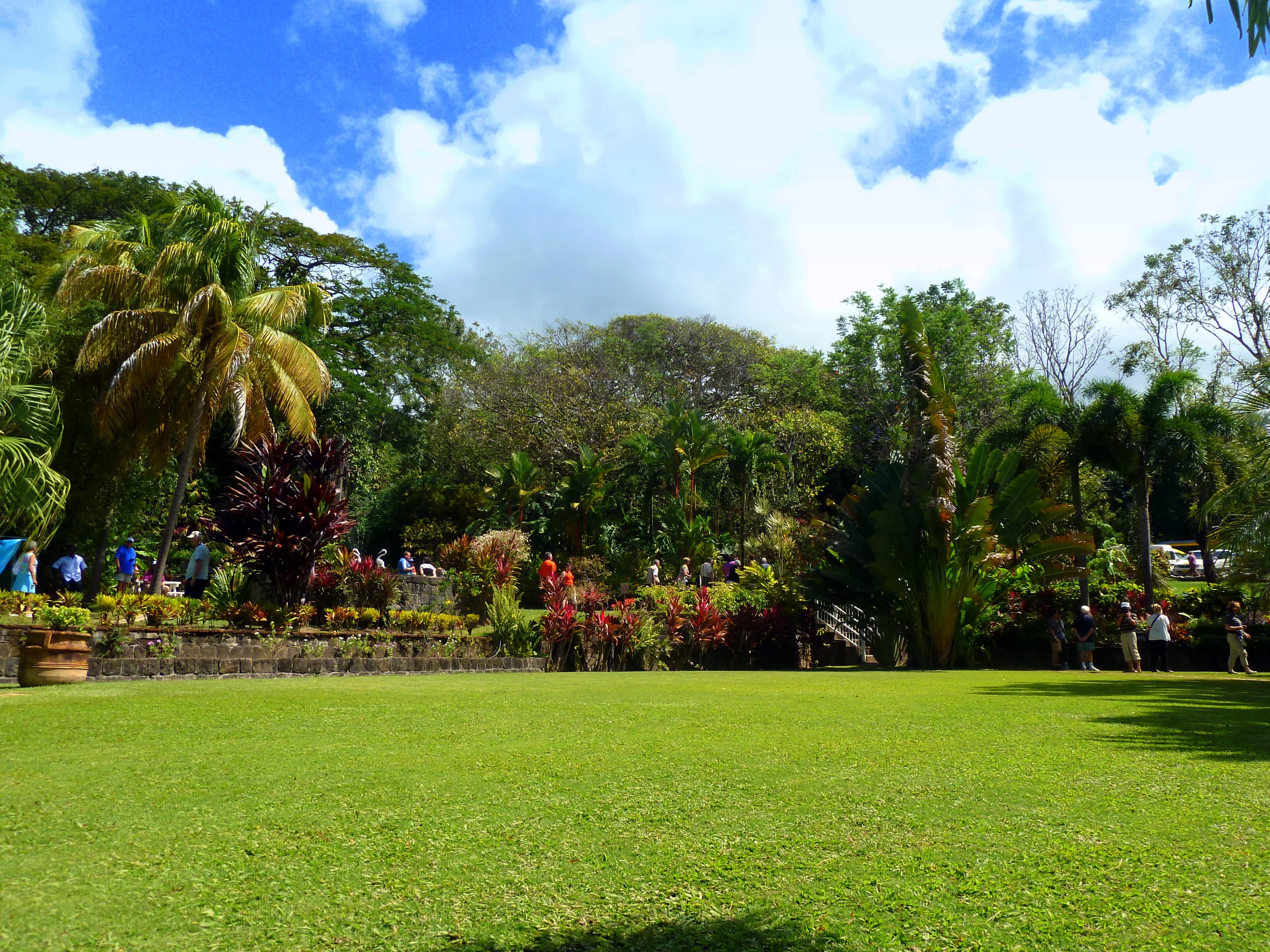
Romney Manor
A 17th-century plantation estate, once owned by ancestors of Thomas Jefferson, with six acres of botanical gardens built around a Saman tree estimated at over 350 years old.
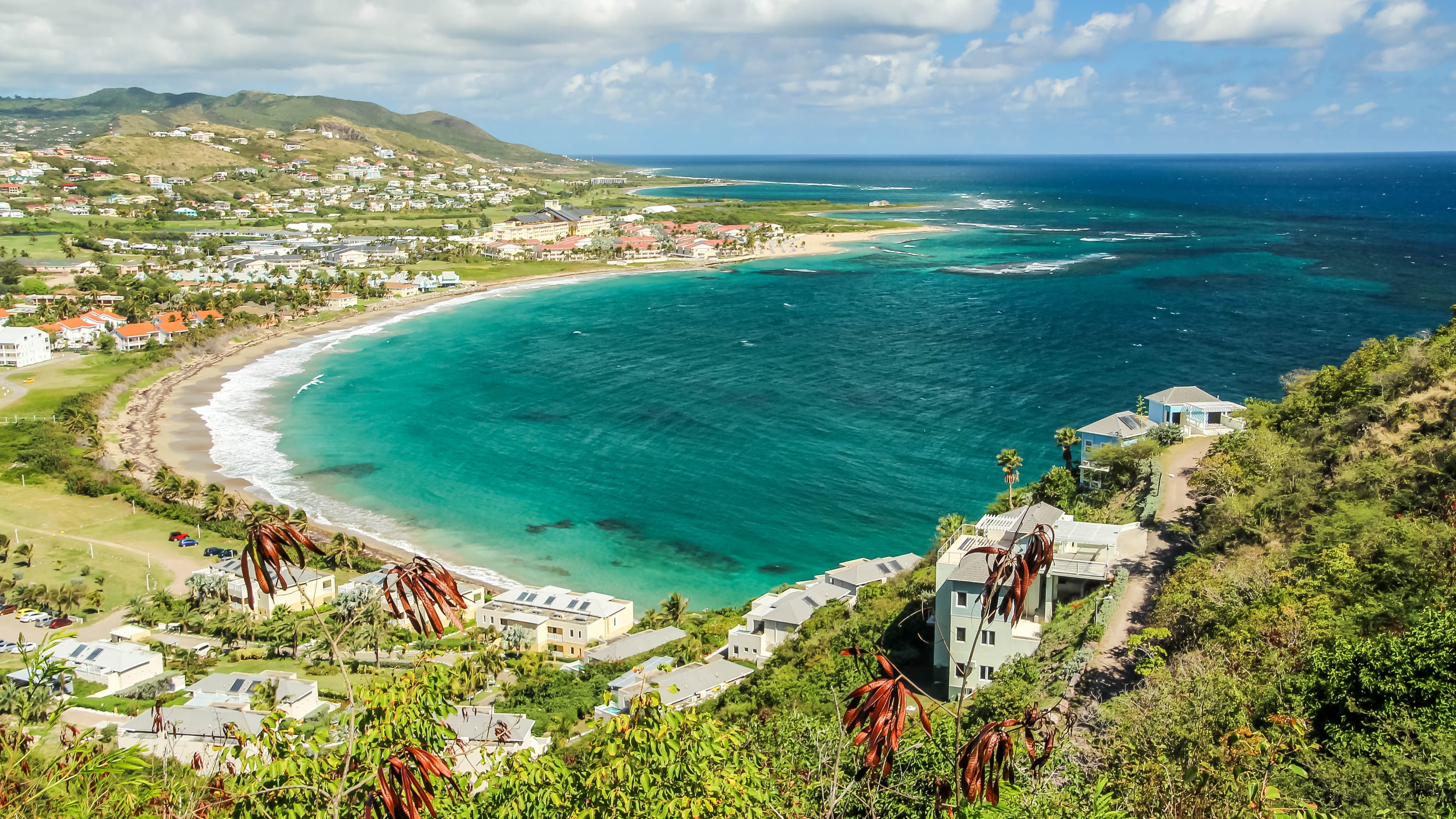
Timothy Hill
A viewpoint on St. Kitts's south-east peninsula where the Atlantic and Caribbean sides of the island are both visible at once.
Photo: Dr. Thomas Liptak, CC BY-SA 4.0, via Wikimedia Commons
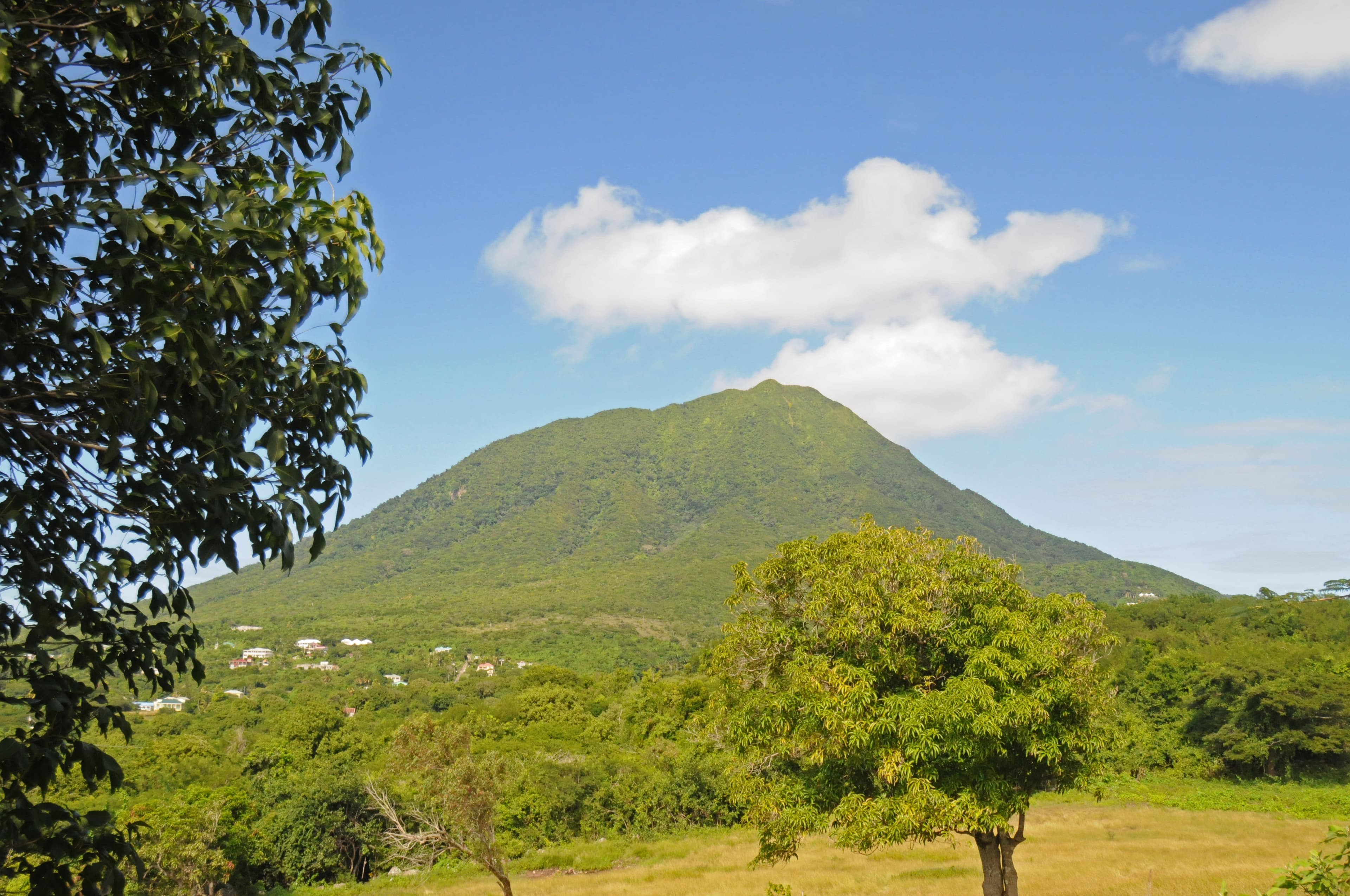
Nevis Peak
The dormant volcano at the centre of Nevis, often cloud-wrapped, with a demanding hike to the summit through rainforest.
South Friars Bay & Cockleshell Bay
South-coast beaches on St. Kitts: South Friars for beach-accessible snorkelling on a reef just offshore, Cockleshell for its laid-back beach bar scene, both looking across to Nevis.
Dieppe Bay's black sand beach
A volcanic black-sand beach on the north coast, where the Caribbean and Atlantic meet.
Pinney's Beach, Nevis
A long, palm-fringed beach on Nevis's west coast lined with casual bars, one of the region's classic beach settings.
Charlestown & the Alexander Hamilton Museum
Nevis's small Georgian-era capital. The Museum of Nevis History sits on the site where US Founding Father Alexander Hamilton is believed to have been born, around 1754, though historians still debate the exact year.
Experiences to have
Sugar Mas
St. Kitts and Nevis's carnival, running from mid-December to early January: the only major Caribbean carnival held over Christmas and New Year rather than before Lent or in summer, ending with a Grand Parade on 1 January.
Riding the Scenic Railway
A slow loop of the island by rail, with rum punch and calypso on board, following the old sugar-cane tracks.
Hiking Nevis Peak
A steep, rope-assisted rainforest climb to the summit of Nevis's volcano.
A ferry day trip to Nevis
A short crossing of The Narrows for a quieter island, hot springs, and Charlestown's Georgian streets.
Snorkelling South Friars Bay
A reef running close and parallel to the beach, with turtles, stingrays and coral within easy swimming distance of the sand.
Local dishes to try
Stewed saltfish, spicy plantains, seasoned breadfruit and coconut dumplings
The current national dish, chosen by national poll in 2003 for the 20th anniversary of independence. Created by Jacqueline Ryan, it replaced goat water as the official dish.
Goat water
The former national dish: a hearty goat stew with papaya, breadfruit and dumplings, seasoned with herbs and hot peppers. Still widely eaten despite losing its official status.
Conch (lambi)
Conch meat, stewed or curried, common along the coast.
Best places to eat
BallahooBasseterre
Overlooking Basseterre's central square, with a wide menu from BBQ chicken wraps and sushi to West Indian curries.
Sprat NetBasseterre
A casual, reasonably priced spot with long wooden benches; locals rate it for pizza as much as seafood.
Rosey's Art Gallery & CaféBasseterre
A relaxed café on the main square for bagels, cakes and frittatas.
Sunset Restaurant & The DockFrigate Bay
Caribbean dining with ocean views on the Frigate Bay strip.
Anthem, motto and pledge
National motto
“Country Above Self”
National anthem
“O Land of Beauty!”, words by Kenrick Georges, music by Kenrick Georges. Adopted 1983, chosen by national competition out of 45 entries, days before independence.
Listen / read more →St. Kitts and Nevis: frequently asked questions
How do I move to St. Kitts and Nevis as a CARICOM national?
The CARICOM Skills Certificate (CSME) is the main route to live and work in St. Kitts and Nevis without a work permit. See the CSME steps for St. Kitts and Nevis for the full application process.
Do all CARICOM nationals need the certificate, or is there full free movement?
No. Four CARICOM countries have gone further than the standard CSME certificate and implemented full free movement between themselves: Barbados, Belize, Dominica, St. Vincent and the Grenadines. Nationals of those four can work in each other's countries without a certificate. Everyone else, including anyone moving to or from St. Kitts and Nevis, still applies for the CSME Skills Certificate.
How much does it cost to visit St. Kitts and Nevis?
St. Kitts and Nevis is moderate to high cost by Caribbean standards, especially in prime tourist and expat areas like Frigate Bay, South Friars and Nevis's beachfront. A budget traveller can expect roughly US$100–150/day (guesthouse or budget hotel, local food, public transport, few tours); mid-range roughly US$200–350/day (a comfortable hotel or Airbnb, a mix of local and nicer restaurants, several tours); luxury US$500+/day (upscale resort or boutique hotel, fine dining, private tours). For a longer stay, see the cost-of-living section above for typical monthly rent, including why electricity runs notably higher here than most of the Caribbean.
What is the currency and do I need cash?
The currency is the Eastern Caribbean dollar (XCD), fixed at EC$2.70 to US$1. US dollars are widely accepted in tourist areas, though change may come back in XCD. Major cards work in many hotels, restaurants and larger shops, but smaller vendors, bars and rural spots often prefer cash. ATMs are available in Basseterre, Frigate Bay and a few other spots on St. Kitts, but limited on Nevis.
Do I need a visa to visit as a tourist?
Many nationalities, including the US, UK, Canada, the EU and CARICOM, can enter visa-free for short stays, often up to 90 days, with a valid passport and proof of onward travel. Always confirm current rules with the St. Kitts and Nevis Immigration Department or your nearest embassy before travelling.
How do I get around the islands?
Inexpensive local buses connect Basseterre with many villages and key sites, though schedules can be informal. Taxis are readily available at the airport, cruise port and major hotels; agree the fare in advance. Rental cars are available at the airport and in Basseterre; driving is on the left, and roads are generally good but narrow and hilly. A ferry runs between Basseterre and Charlestown on Nevis for day trips or an overnight stay; check current schedules before planning.
What are the must-do experiences in St. Kitts and Nevis?
Explore Brimstone Hill Fortress National Park, a UNESCO World Heritage Site and one of the best-preserved historic fortresses in the Caribbean. Relax on Frigate Bay or South Friars Bay, both with beach bars and water sports. Hike Nevis Peak with a guide for rainforest trails and panoramic views, or spend the day at Pinney's Beach, a long palm-fringed beach with casual bars and restaurants. Tour historic sugar-estate sites like Romney Manor, or take the ferry to Nevis for beaches, Charlestown and waterfront dining.
What local food should I try?
Stewed saltfish with spicy plantains, seasoned breadfruit and coconut dumplings is the current national dish, chosen by national poll in 2003. Goat water, a hearty goat stew with breadfruit and dumplings, was the dish it replaced and is still widely eaten. Also look for roti (curry chicken, goat or shrimp in flatbread), fried fish, grilled lobster and conch, and rice and peas with stewed chicken or fish and provision. Try the local bars and small restaurants in Basseterre, beach bars in Frigate Bay and South Friars, and the waterfront venues around Pinney's Beach on Nevis.
Is St. Kitts and Nevis safe for tourists?
The federation is generally considered relatively safe for tourists, with most visits trouble-free. Petty theft (bags, phones) can occur, especially on beaches or in crowded areas. Use normal precautions: don't leave valuables in cars or on the beach, avoid poorly lit areas at night, and secure belongings in your accommodation. Check your government's current travel advisory before you go.
What is the best time to visit?
December to April is the dry, sunny, busiest and most expensive stretch. May–June and November are shoulder season: good weather, fewer crowds, better deals. July–October is rainier and more humid with higher hurricane risk, and prices are lowest. For beach time, hiking and exploring with reliable weather, aim for December–April or May–June.
What should I pack?
Light, breathable clothing, swimwear, sandals and comfortable shoes for walking and light hikes, plus sunscreen, a hat, sunglasses and insect repellent. A light rain jacket or poncho helps, especially in the wetter months. Bring something a little more modest if you'll visit a church or formal venue. For hiking Nevis Peak or a longer walk, add lightweight long trousers, moisture-wicking shirts and a small daypack.
Any cultural tips I should know?
Kittitians and Nevisians are generally friendly and polite; a greeting before asking a question is appreciated. Dress is casual but neat, with modest attire expected in churches and some villages. Tipping 10–15% in restaurants is standard if a service charge isn't already included, with small tips for taxi drivers and tour guides welcome. Life runs relatively relaxed, especially on Nevis, so build in patience for schedules.
Thinking about moving to St. Kitts and Nevis?
Let us help you plan the next step. Get a personalised document plan, estimated timeline and practical next steps for your destination.
Last reviewed August 2026. Cost of living figures, rents, fees and office details change, and the figures here are drawn from the named sources on this page rather than being guaranteed prices. Confirm anything you are relying on before you act on it.